Mouse-sized rodents that chew narrow runways through the grass and eat the roots, bark and bulbs of shrubs and perennials.
Meadow voles leave 1 to 2 inch wide trails worn through the grass at the soil surface, usually with small open holes about the size of a quarter and no mound of soil. Pine voles work mostly underground and often use old mole tunnels, so the first sign is a shrub, hosta or bulb planting that wilts, leans or pulls out of the ground with the roots gnawed off. Look for gnaw marks at the base of young trees and shrubs under the mulch. Voles are stocky, brown, short-tailed and about 4 to 6 inches long.
Often mistaken for: Moles (raised ridges and mounds, no open holes or chewed plants), mice, or root rot and drought on a wilting shrub
Active all year, day and night, and they breed through most of it. Damage is noticed most in late winter and early spring, when the grass is matted down and runways show, and after a stretch of cold when they chew bark and roots because other food is scarce.
Lawns with thick thatch, tall grass, deep mulch or groundcover, and foundation beds next to woods, fields or overgrown fence lines across the Triangle.
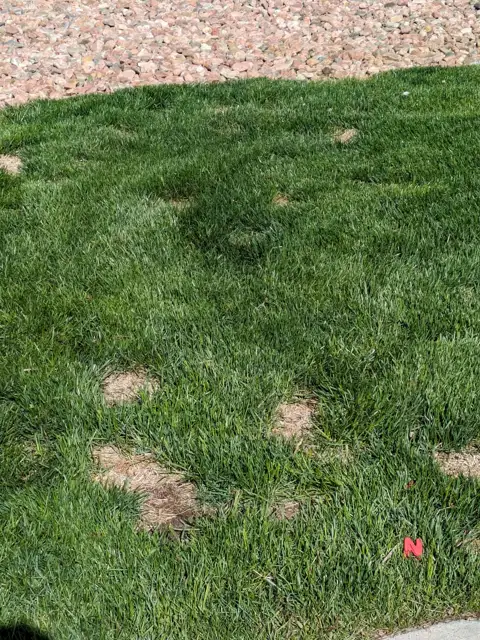
Brown, dead-centered spots ringed with extra dark-green grass, caused by the concentrated nitrogen and salts in a dog's urine.
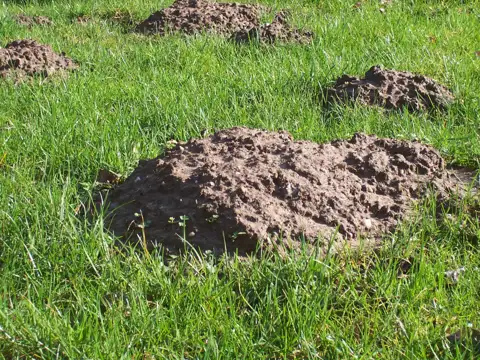
A small digging mammal that leaves raised, spongy tunnels and volcano-shaped mounds across the lawn while hunting earthworms and grubs underground.
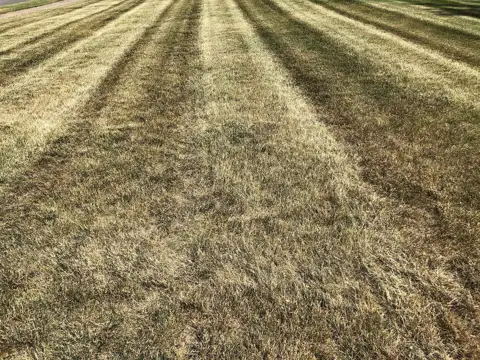
Summer decline of tall fescue when heat and dry weather outrun the roots, showing as footprints, gray-blue color, wilting and eventually brown dormant turf.
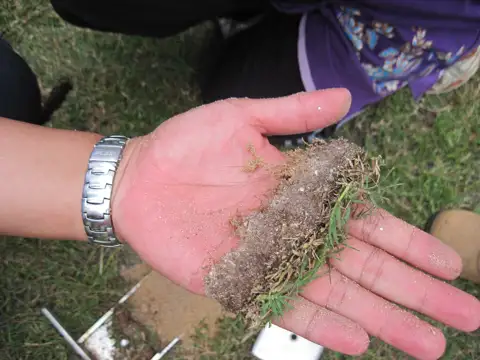
A spongy layer of dead stems and roots between the grass and the soil that blocks water and air once it builds past half an inch.
Posted prices, no contracts, and the same person on your lawn every visit.