Brown, dead-centered spots ringed with extra dark-green grass, caused by the concentrated nitrogen and salts in a dog's urine.
Round brown or straw-colored spots, usually a few inches to a foot across, with a halo of darker, faster-growing green grass around the edge. The center dies because the urine acts like a fertilizer overdose; the edge gets a lighter dose and greens up. Spots cluster where the dog goes most, often near the door, along the fence or on the first patch of grass by the walk. Female dogs and large dogs leave bigger spots because they empty more in one place.
Often mistaken for: Brown patch, dollar spot, fertilizer spills, or grub damage
Can happen any time of year, but the damage is worst in summer when the lawn is already hot and dry and the urine isn't diluted by rain. Spots often appear suddenly after a dry spell.
Any lawn with a dog, and lawns next to a sidewalk or route where neighbors walk theirs. Tall fescue and bermuda both get it, but bermuda fills back in on its own faster.
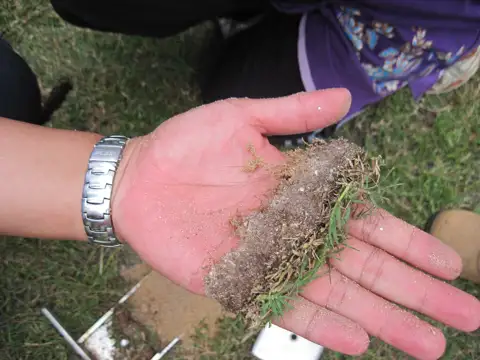
A spongy layer of dead stems and roots between the grass and the soil that blocks water and air once it builds past half an inch.
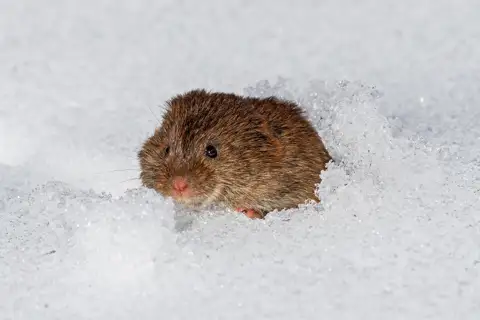
Mouse-sized rodents that chew narrow runways through the grass and eat the roots, bark and bulbs of shrubs and perennials.
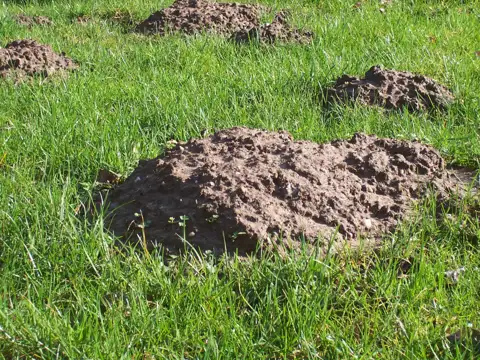
A small digging mammal that leaves raised, spongy tunnels and volcano-shaped mounds across the lawn while hunting earthworms and grubs underground.
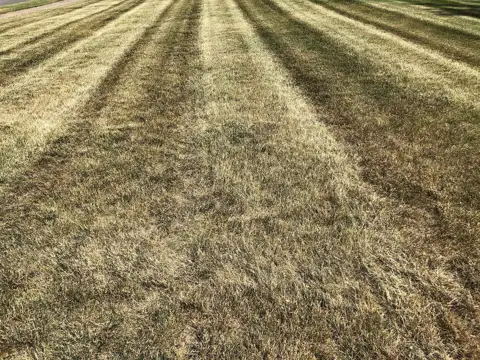
Summer decline of tall fescue when heat and dry weather outrun the roots, showing as footprints, gray-blue color, wilting and eventually brown dormant turf.
Posted prices, no contracts, and the same person on your lawn every visit.