A small digging mammal that leaves raised, spongy tunnels and volcano-shaped mounds across the lawn while hunting earthworms and grubs underground.
Raised ridges of turf that snake across the lawn and give under your feet, plus cone-shaped mounds of loose soil with no visible hole. The grass over a shallow tunnel often browns because the roots are lifted out of the soil. You will rarely see the mole itself: it is about 6 inches long, gray, with a pointed snout, oversized front paws and no visible eyes. Moles do not eat grass or roots; the damage is from the digging.
Often mistaken for: Voles (which leave open runways and holes, not raised ridges), or grub damage (turf lifts like a rug, no tunnels)
Active year-round, but tunneling is most obvious in spring and fall when the soil is moist and earthworms are close to the surface. In summer heat and winter cold they dig deeper and the surface ridges mostly stop. Rain brings them back up.
Any lawn with moist, loose soil and plenty of earthworms. Shady, well-watered yards and lawns next to woods, creeks and greenways in the Triangle see the most activity.
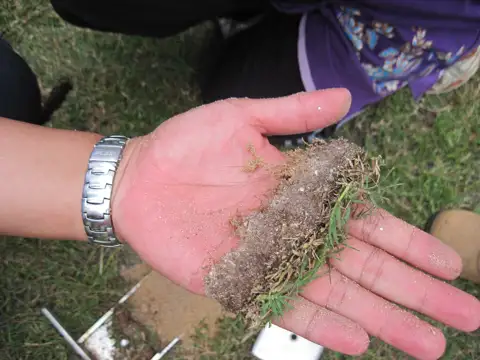
A spongy layer of dead stems and roots between the grass and the soil that blocks water and air once it builds past half an inch.

Mouse-sized rodents that chew narrow runways through the grass and eat the roots, bark and bulbs of shrubs and perennials.
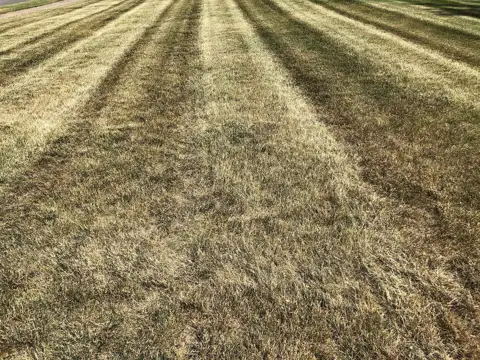
Summer decline of tall fescue when heat and dry weather outrun the roots, showing as footprints, gray-blue color, wilting and eventually brown dormant turf.
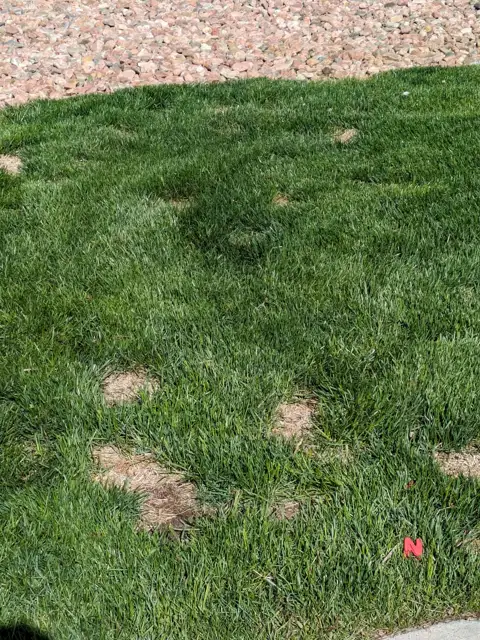
Brown, dead-centered spots ringed with extra dark-green grass, caused by the concentrated nitrogen and salts in a dog's urine.
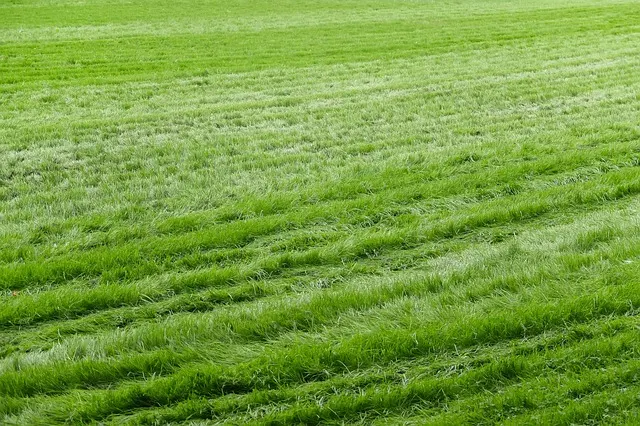
Posted prices, no contracts, and the same person on your lawn every visit.