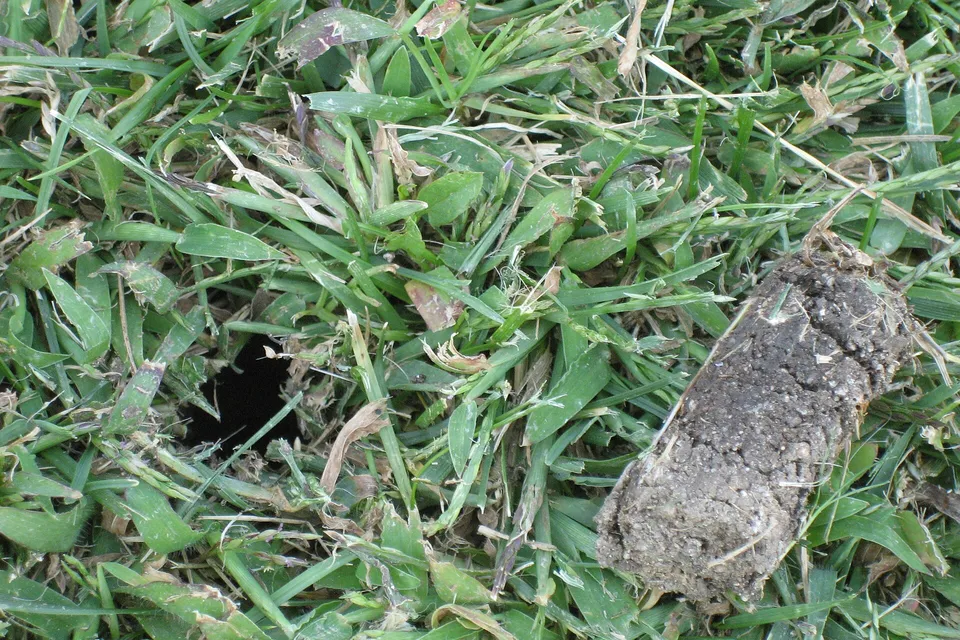
Relieves compaction and thickens thin lawns: fall aeration and overseeding for fescue, core aeration for bermuda and zoysia.
Our clay soil packs down hard, and compacted soil chokes roots. Core aeration pulls thousands of small plugs to open the ground back up so air, water and nutrients reach the roots, and it’s the perfect moment to add fresh seed.
For fescue lawns, fall aeration and overseeding is the most important service of the year. It’s how thin, heat-beaten summer lawns come back thick and green by late fall. Bermuda and zoysia lawns benefit from aeration too, just on their own timing.
And I take my time. Most crews race a big machine across the open lawn and call it done. I slow down where the lawn needs it, get into the tight spots, and spread the seed by hand.
I treat lawns in North Raleigh, Leesville, Brier Creek and Southeast Durham.
New seed has to stay moist, and fescue seed sprouts best with the soil in the 50s and 60s. Check this week’s rain, watering needs and soil temperature: Raleigh watering & soil temperatures this week →
My aerator punches straight down instead of rolling a drum of tines across the lawn. Rolling machines leave the same spacing no matter what. With mine, slowing down packs the cores closer together, so thin and bare areas get two to three times the holes for the seed to root in.
The machine is 18 inches wide, so it fits through gates, along beds, between the AC units and into side yards that big machines skip. Those narrow spots are often the thinnest grass on the property.
I carry the seed in a shoulder spreader instead of pushing a spreader, so I can see exactly where it’s going and add extra to bare and thin spots as I walk.
Blue-tag certified turf-type tall fescue, blended for the Raleigh area and built for our conditions.
Aerating and seeding together drops seed right into fresh core holes for strong germination.
Bermuda and zoysia benefit from core aeration in late spring and summer to relieve compaction, even though they aren’t overseeded like fescue.
Tap any of these to see what it looks like, when it shows up here, and what you can do.
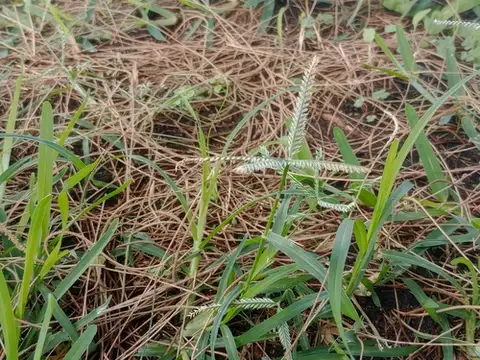
A tough summer grassy weed that thrives in compacted, worn-down lawns and spreads fast in high-traffic areas.
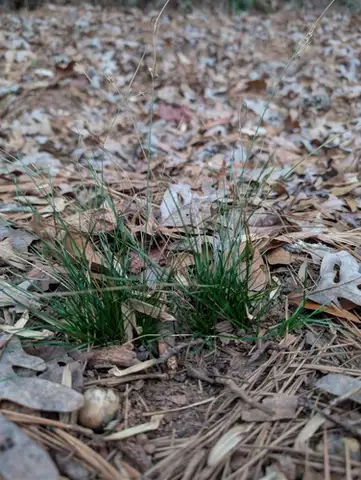
A tough, grass-like perennial that pops up in compacted soil, especially along paths and high-traffic spots.
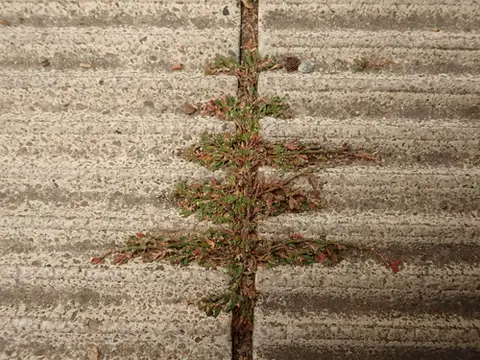
A wiry, mat-forming weed that thrives in compacted soil, often along walkways and thin turf areas.
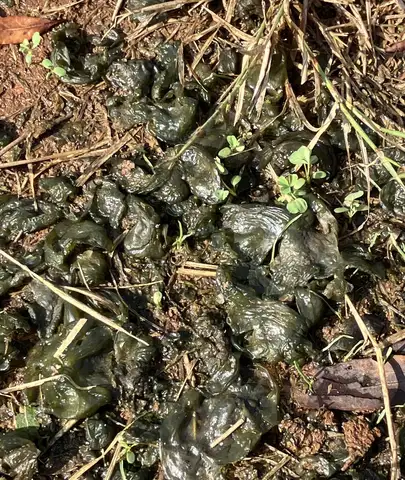
A slimy dark scum that grows on bare, wet, shady soil where grass is thin—more of a symptom than a disease itself.
Aeration relieves compaction and wakes up the roots, and overseeding fills in thin spots and summer damage. Together they’re the reset button that brings a tired fescue lawn back, and they set it up to look its best through fall and into next year.
It starts at $200 and is priced by your lawn’s size, because the work is mostly labor. Ask for a free estimate and I’ll measure your lawn from satellite and send you an exact price.
For fescue, September and October. That’s the window where new seed has time to root before winter and get strong before summer. Bermuda and zoysia get core aeration in May or June, while they’re growing hard, with no overseeding.
Mow a few days before, a little shorter than usual, and water the day before if it’s been dry so the tines can pull good cores. Flag sprinkler heads, invisible dog fence lines and anything buried shallow.
Fescue seed usually sprouts in 7–14 days if it stays moist, and the lawn fills in through October and November. Skipping water in those first weeks is the most common reason overseeding fails.
Yes. They get core aeration in late spring to relieve compaction. They aren’t overseeded with fescue, because the two grasses grow at opposite times of year.
It’s included in Premium. On Essentials or Complete, or with no program at all, you can book it on its own.
Here’s what happens after you ask for an estimate.
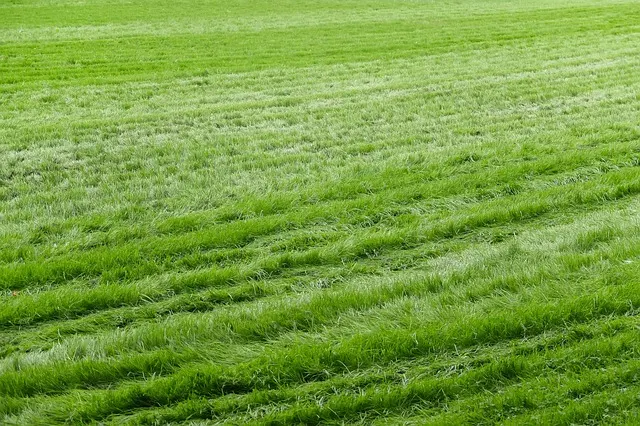
Posted prices, no contracts, and the same person on your lawn every visit.