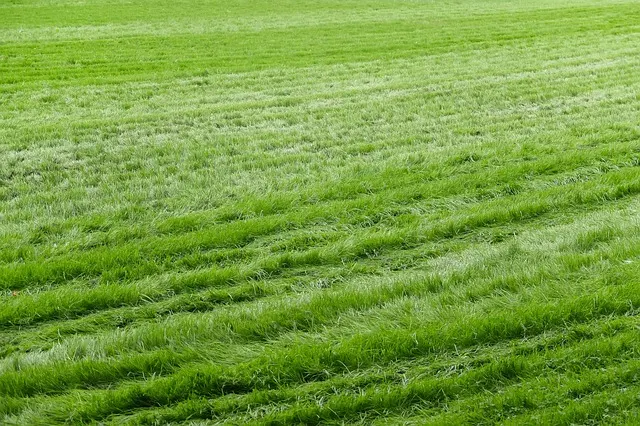
Summer decline of tall fescue when heat and dry weather outrun the roots, showing as footprints, gray-blue color, wilting and eventually brown dormant turf.
The first sign is footprinting: the grass does not spring back after you walk on it and your tracks stay visible. Then the blades roll or fold, take on a dull gray-blue cast, and the lawn thins and turns straw-brown in the hottest, driest or most exposed areas first (slopes, south sides, along driveways and sidewalks, under trees competing for water). Dormant fescue is tan but the crowns at the soil line are still alive and firm; dead fescue pulls up easily and the crowns are brown and dry.
Often mistaken for: Brown patch, white grubs, irrigation coverage gaps, or chinch bugs
June through early September in the Triangle, peaking during July and August when nights stay above 70°F. Tall fescue is a cool-season grass and slows its growth in this heat no matter how much you water. It recovers with cooler nights in September.
Every tall fescue lawn in the Piedmont to some degree, and worst on red clay that has been compacted, on slopes and on lawns mowed short or fed with nitrogen in summer.
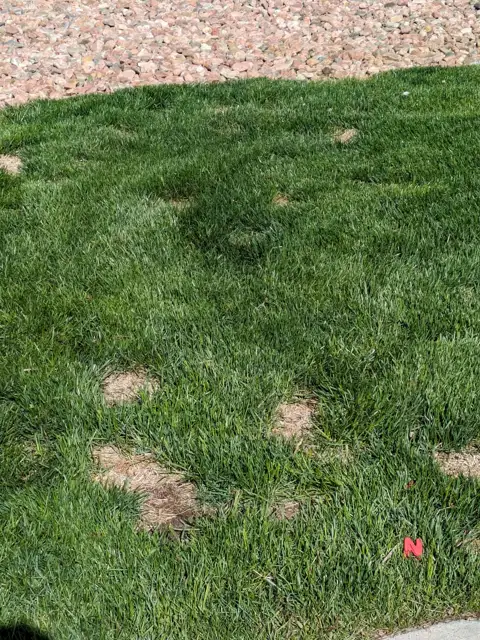
Brown, dead-centered spots ringed with extra dark-green grass, caused by the concentrated nitrogen and salts in a dog's urine.
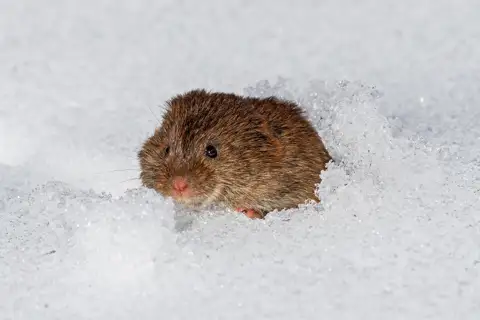
Mouse-sized rodents that chew narrow runways through the grass and eat the roots, bark and bulbs of shrubs and perennials.
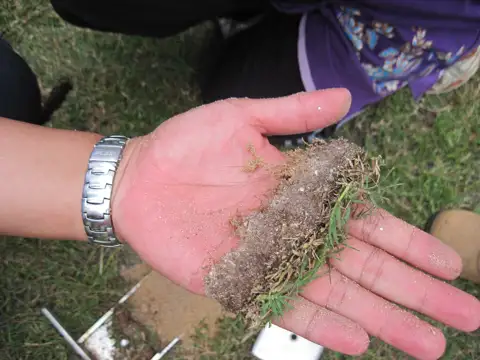
A spongy layer of dead stems and roots between the grass and the soil that blocks water and air once it builds past half an inch.
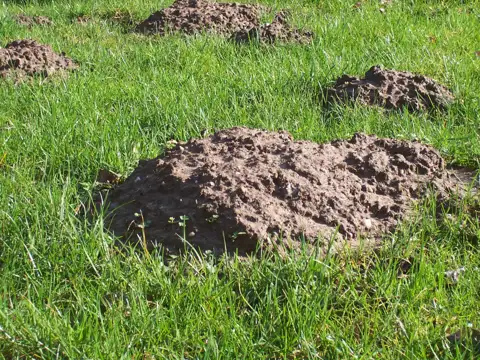
A small digging mammal that leaves raised, spongy tunnels and volcano-shaped mounds across the lawn while hunting earthworms and grubs underground.
Posted prices, no contracts, and the same person on your lawn every visit.