Bagworms
Small caterpillars that build camouflaged bags on trees and shrubs, chewing foliage and thinning out plants over time.
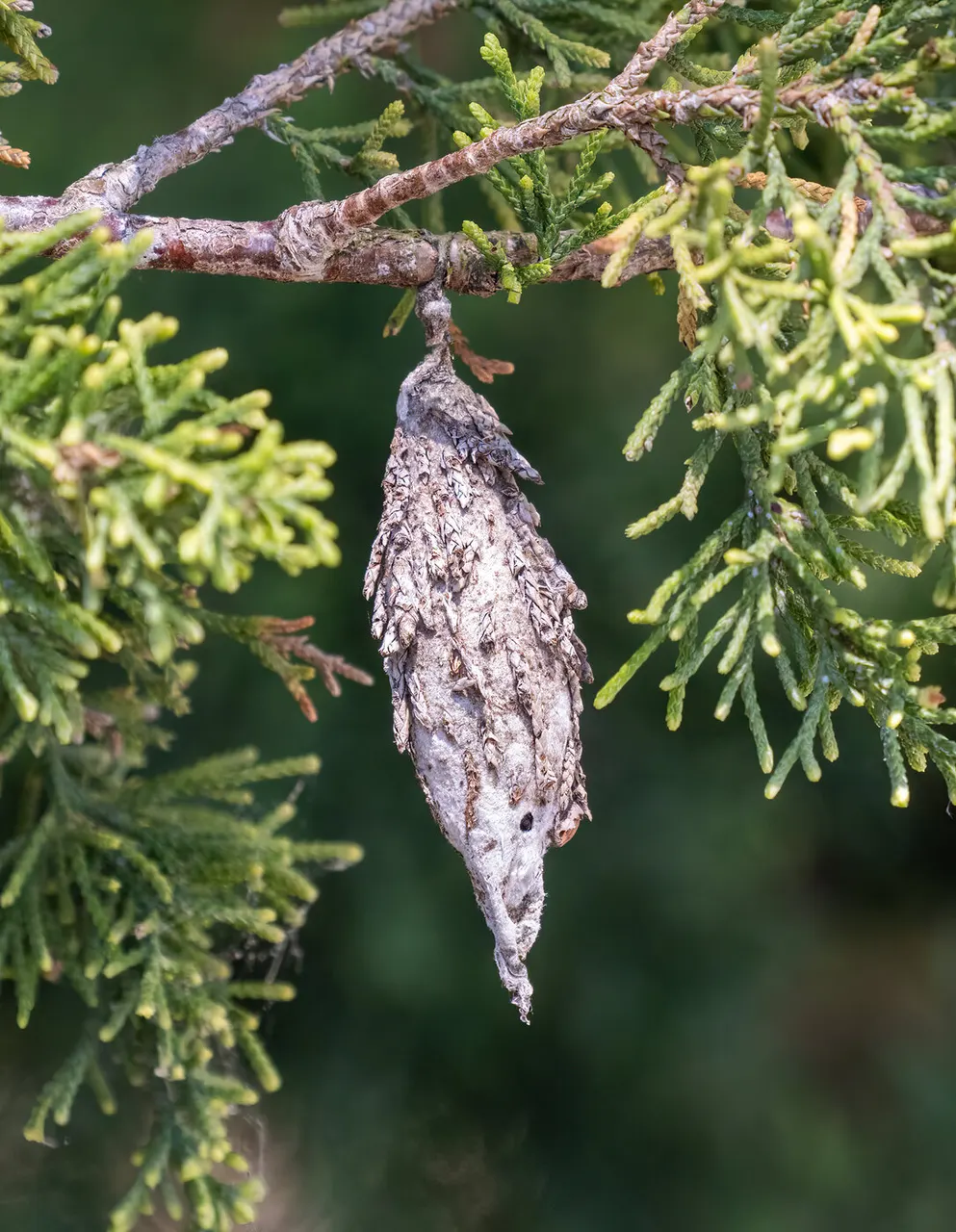
Small caterpillars that build camouflaged bags on trees and shrubs, chewing foliage and thinning out plants over time.
Look for small, cone-shaped silk bags covered in bits of leaves or needles, hanging from branches. They blend in so well on conifers that they're easy to walk right past. Bags may be still or slowly moving as the larvae feed inside.
Often mistaken for: Small pinecones or wind-blown debris caught in branches
Eggs hatch in late spring (May-June) in the Triangle, and the larvae keep feeding and growing through summer, maturing by August.
Common on conifers like Leyland cypress, arborvitae, cedar, juniper, and pine, but also shows up on many deciduous trees and shrubs.
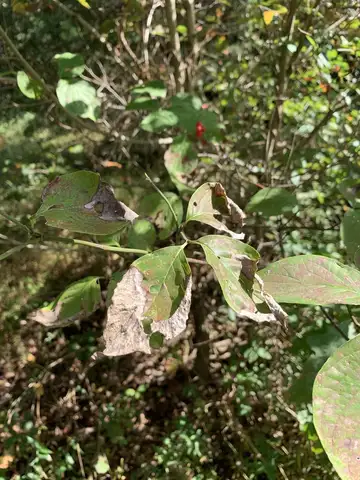
A fungal disease of flowering dogwoods that causes leaf spots, dieback, and can kill weak or shaded trees over time.
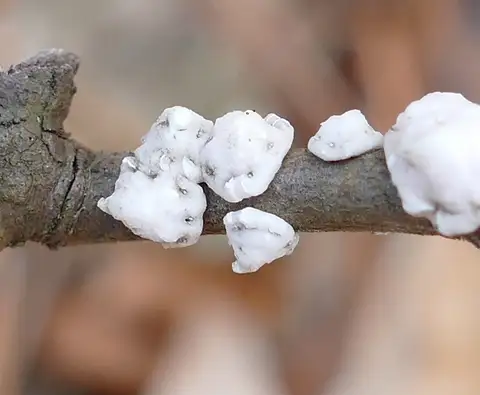
A small waxy insect that feeds on woody shrubs and trees, leaving sticky honeydew and sooty mold behind.
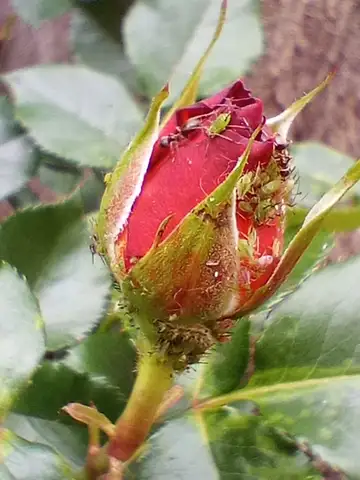
Tiny sap-sucking bugs on ornamentals that leave sticky honeydew and black sooty mold on leaves.
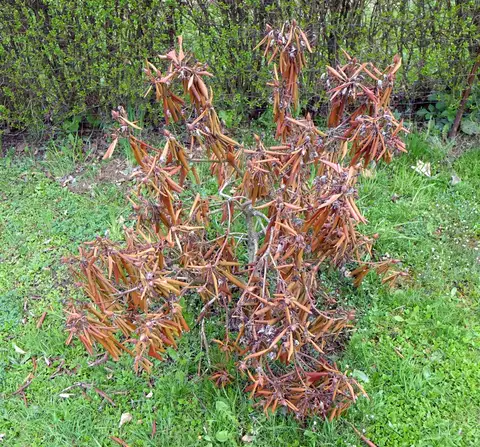
A soil-borne disease that rots roots and crowns of shrubs in wet, poorly-drained spots, often mistaken for drought stress.