Take-All Root Rot
A soil-borne disease that attacks bermudagrass roots, causing patches of thin, weak turf that struggle to recover.
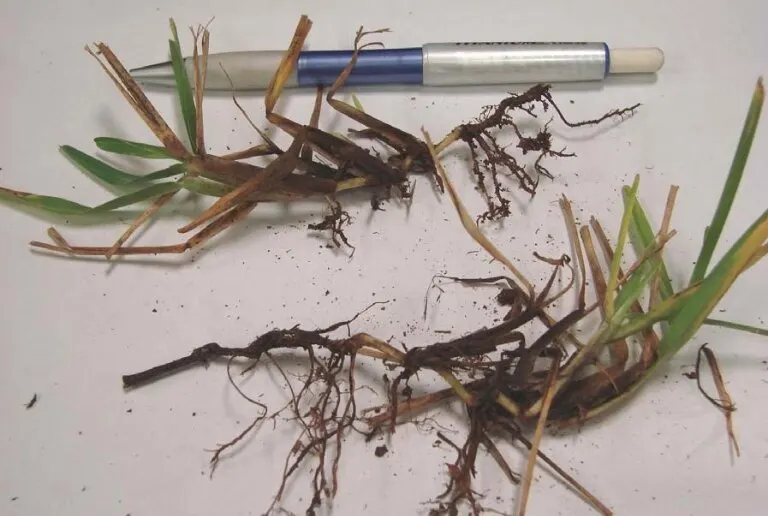
A soil-borne disease that attacks bermudagrass roots, causing patches of thin, weak turf that struggle to recover.
Irregular patches of off-color to almost white grass, ranging from a few inches to several feet across. If you pull up the grass, the roots and stolons look dark and rotted instead of white and healthy. In bad cases, older leaves yellow and the crown of the plant dies out.
Often mistaken for: General winter dormancy or drought stress in bermudagrass
Infection usually starts in late summer when soils are warm, but most homeowners notice the damage in fall, winter, or spring when cooler days and shorter daylight stress the bermuda further.
Affects bermudagrass lawns.
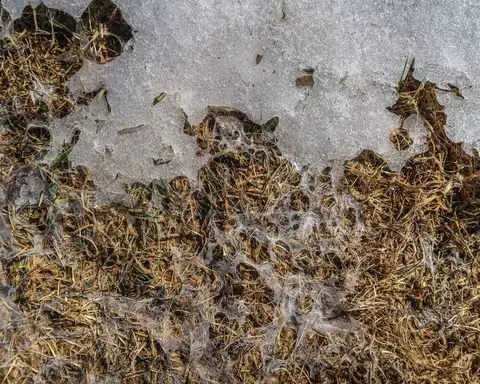
A cool-weather lawn disease that leaves pink-tinged, matted patches in your grass, even without real snow.
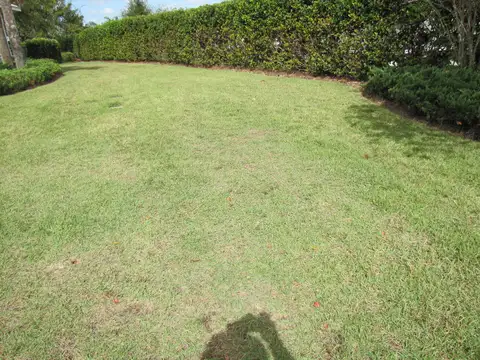
Tiny soil pests that damage grass roots, causing patchy thinning that looks like drought stress but doesn't respond to water.
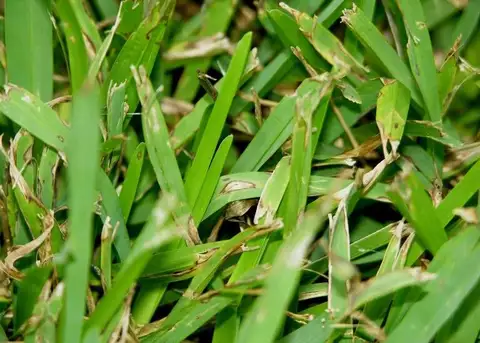
A summer disease that hits stressed lawns hard, especially newly established fescue and ryegrass.
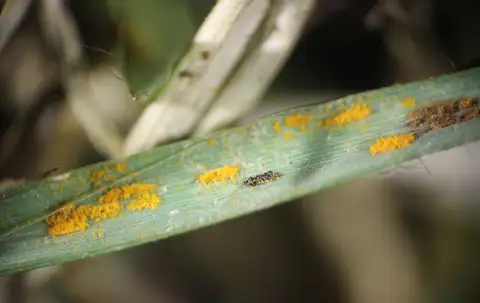
A lawn disease that leaves grass looking dusty orange, usually a sign the turf is stressed and needs some TLC.