Gray Leaf Spot
A summer disease that hits stressed lawns hard, especially newly established fescue and ryegrass.
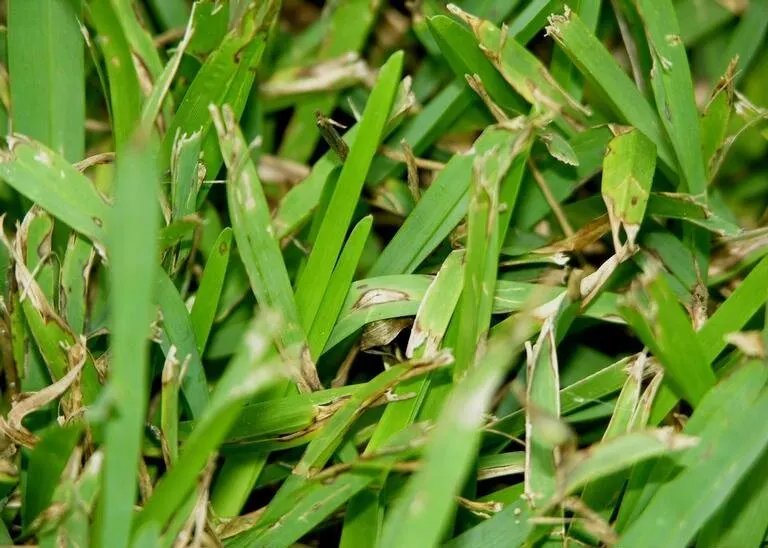
A summer disease that hits stressed lawns hard, especially newly established fescue and ryegrass.
Round or oval tan spots with dark brown edges that turn gray and fuzzy when it's humid. On fescue and ryegrass, it can show up as 4-12 inch orange-yellow, greasy-looking matted patches, which can look a lot like a different disease called pythium blight.
Often mistaken for: Pythium blight
Shows up here from July through September, especially during hot, humid stretches when temps sit between 70-95°F and grass stays wet for long periods overnight.
Affects tall fescue, perennial ryegrass, zoysiagrass, and St. Augustinegrass lawns, with new lawns (planted within the past year) at the highest risk.
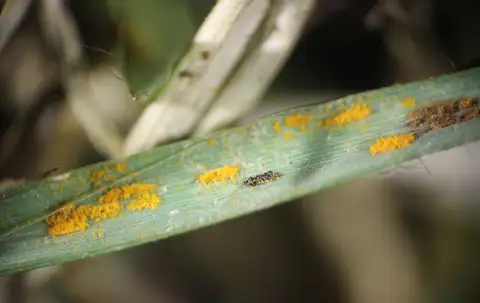
A lawn disease that leaves grass looking dusty orange, usually a sign the turf is stressed and needs some TLC.
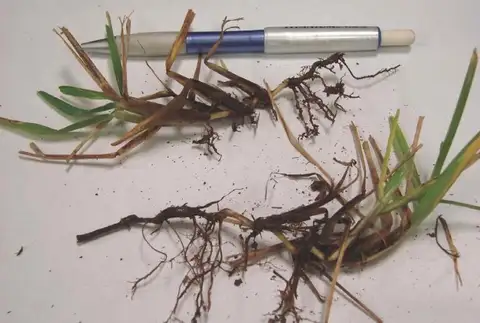
A soil-borne disease that attacks bermudagrass roots, causing patches of thin, weak turf that struggle to recover.
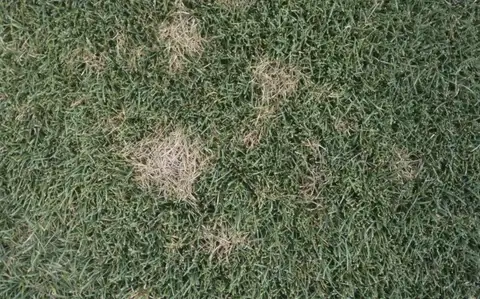
A common lawn disease that leaves small bleached-out spots, most noticeable on closely mowed grass.
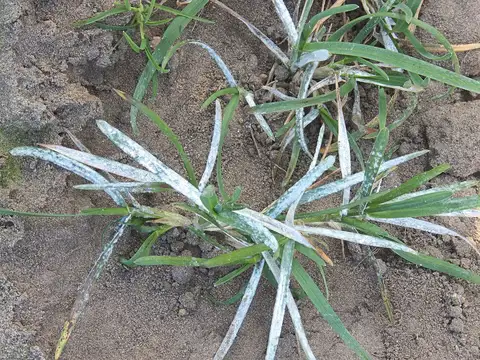
A white, dusty coating on grass blades in shady lawn areas. It looks bad but is mostly a symptom of too much shade.