Powdery Mildew
A white, dusty coating on grass blades in shady lawn areas. It looks bad but is mostly a symptom of too much shade.
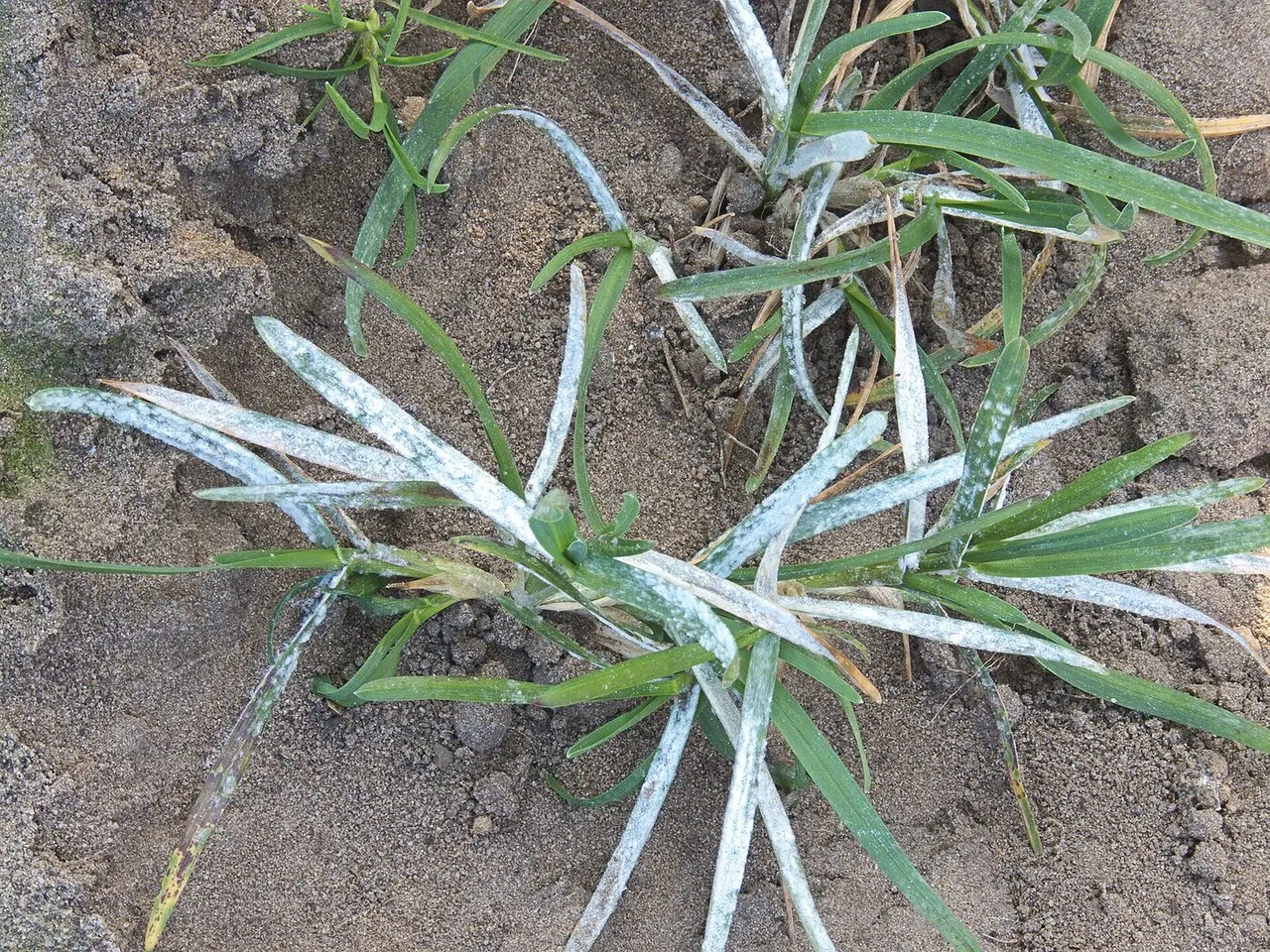
A white, dusty coating on grass blades in shady lawn areas. It looks bad but is mostly a symptom of too much shade.
A white-to-gray powder covering the grass blades, almost like flour or chalk dust, that rubs off easily if you touch it. It shows up only in shaded parts of the lawn. Don't confuse it with dew or frost sitting on the grass, or with gray leaf spot, which causes tan-bordered spots rather than a powdery coating.
Often mistaken for: Dew or frost residue; gray leaf spot
Shows up spring through fall in the Triangle, anywhere Kentucky bluegrass or fine fescue is growing in persistent shade with poor air movement.
Affects Kentucky bluegrass and fine fescue lawns growing in shaded areas.
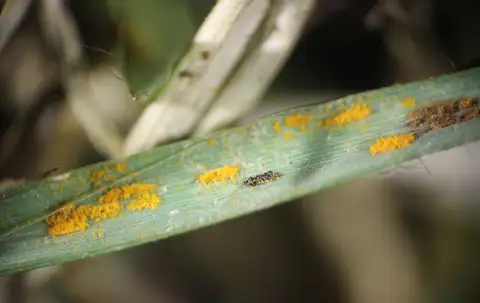
A lawn disease that leaves grass looking dusty orange, usually a sign the turf is stressed and needs some TLC.
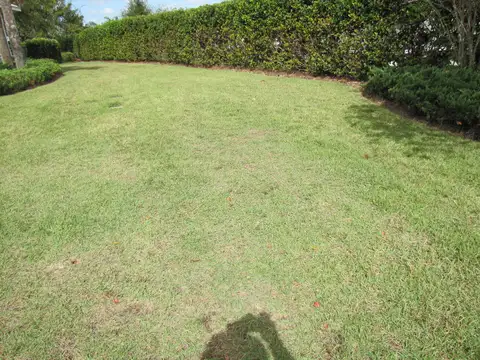
Tiny soil pests that damage grass roots, causing patchy thinning that looks like drought stress but doesn't respond to water.
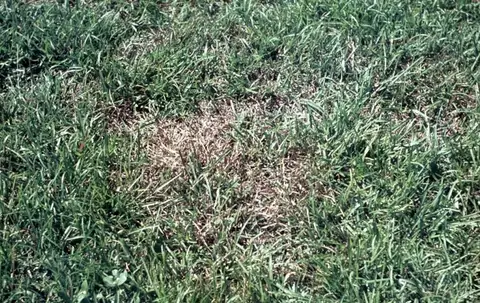
A fungal disease that causes big circular patches in warm-season lawns during cool, wet weather.
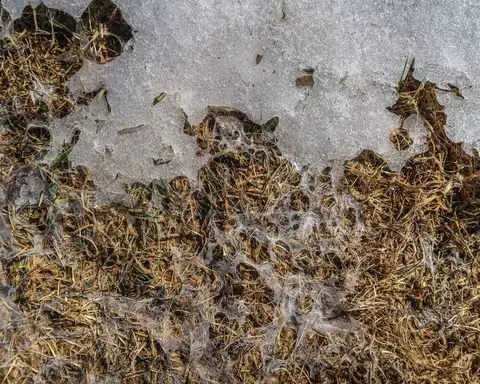
A cool-weather lawn disease that leaves pink-tinged, matted patches in your grass, even without real snow.