Large Patch
A fungal disease that causes big circular patches in warm-season lawns during cool, wet weather.
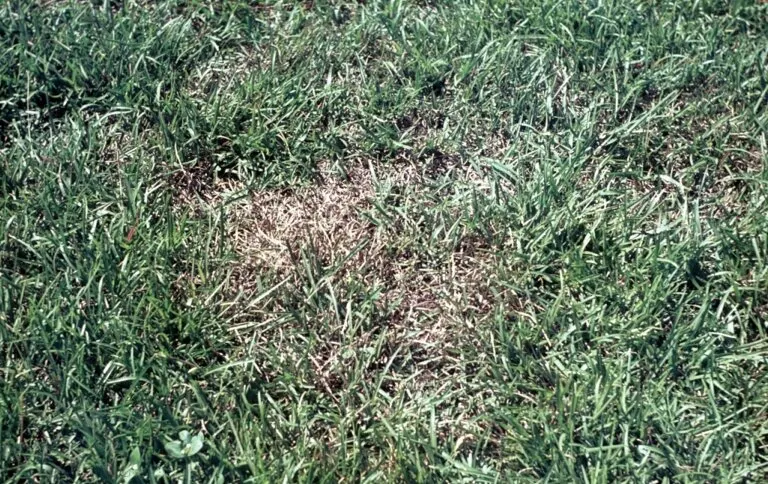
A fungal disease that causes big circular patches in warm-season lawns during cool, wet weather.
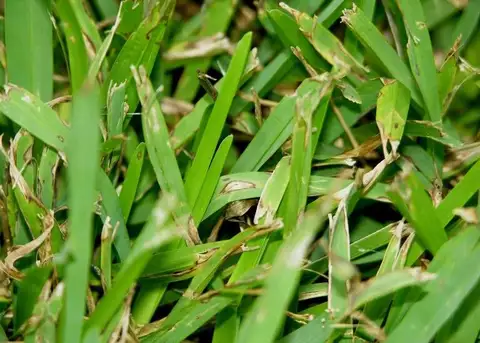
Roughly circular patches, often a foot or more across, that turn tan, yellow, orange, or reddish. The disease attacks the leaf sheaths near the base of the grass rather than the blade tips, which helps tell it apart from other lawn problems.
Often mistaken for: Other patch diseases or general winter dormancy discoloration
Infection actually starts in fall once soil cools down, but you usually don't see symptoms until later—either during cool, wet fall weather or again the following spring as the lawn greens up. It can show up anytime from late summer through late spring.
Affects warm-season lawns, including zoysia, centipede, St. Augustine, and bermuda.
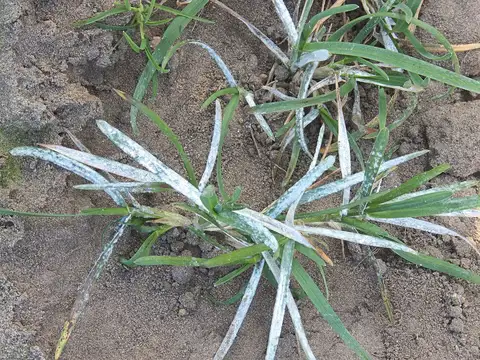
A white, dusty coating on grass blades in shady lawn areas. It looks bad but is mostly a symptom of too much shade.
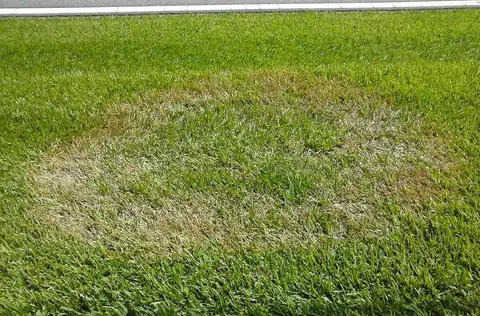
A summer fungal disease that causes circular brown patches in fescue and other cool-season lawns during hot, humid weather.
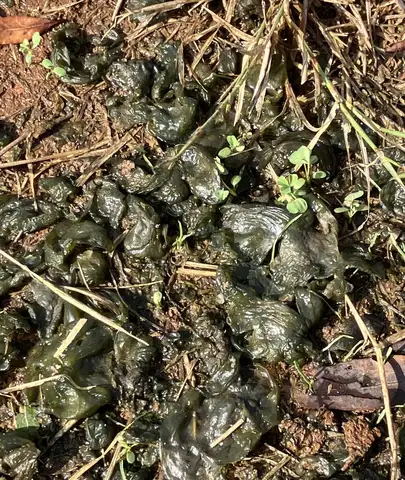
A slimy dark scum that grows on bare, wet, shady soil where grass is thin—more of a symptom than a disease itself.
A summer disease that hits stressed lawns hard, especially newly established fescue and ryegrass.