Brown Patch
A summer fungal disease that causes circular brown patches in fescue and other cool-season lawns during hot, humid weather.
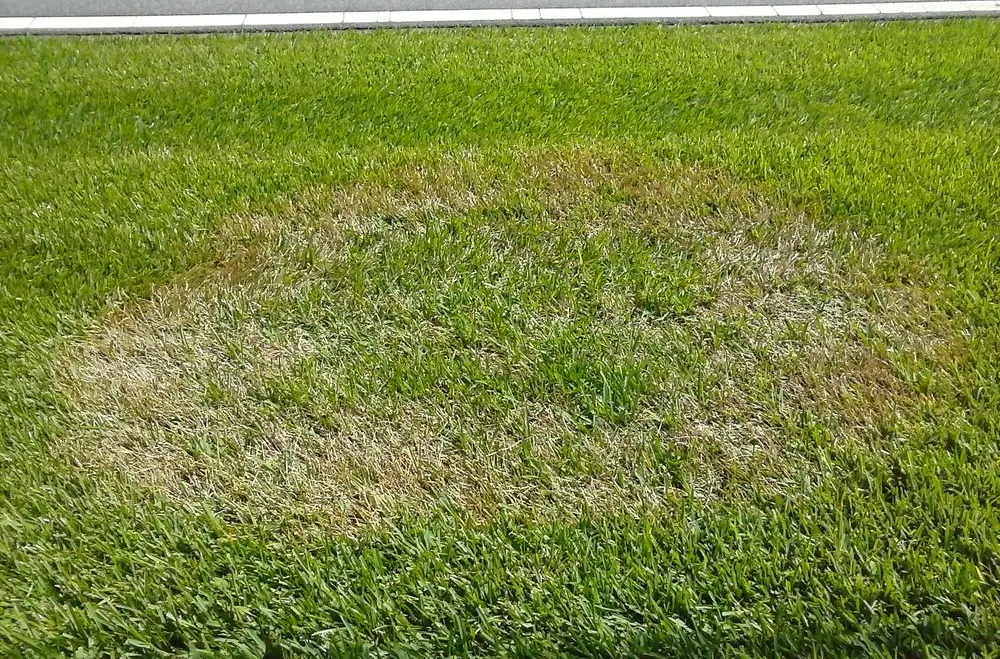
A summer fungal disease that causes circular brown patches in fescue and other cool-season lawns during hot, humid weather.
Circular brown, tan, or yellowish patches ranging from about 6 inches to several feet wide. Grass blades show tan spots with dark brown edges, and you may notice a smoky dark ring around the patch edge in humid conditions. When it's wet out, look for gray, cottony growth on the grass.
Often mistaken for: Dollar spot or other summer patch diseases
Shows up May through September in the Triangle, especially during stretches of warm, humid nights and hot days with heavy dew or long periods of wet grass.
Mainly affects tall fescue and fine fescue lawns, though bentgrass and Kentucky bluegrass can get it too.
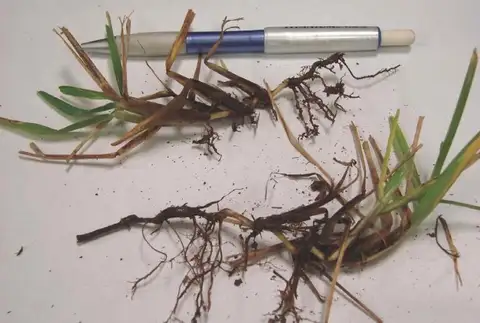
A soil-borne disease that attacks bermudagrass roots, causing patches of thin, weak turf that struggle to recover.
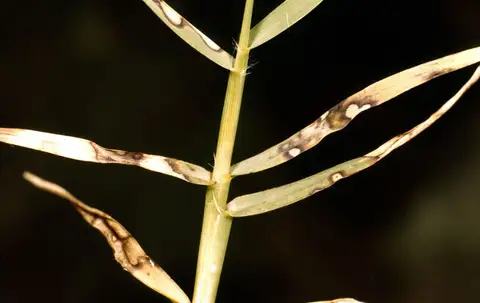
A cool-season disease that starts as small leaf spots and can weaken tall fescue and bluegrass roots, causing thin, dying patches.
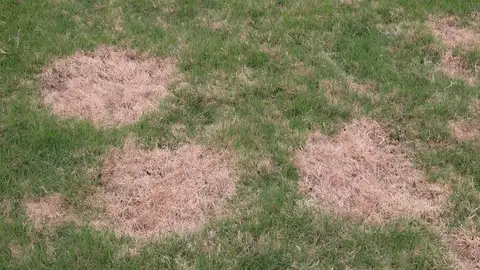
A fungal disease of bermuda and zoysia lawns that leaves circular dead patches which don't green up in spring.
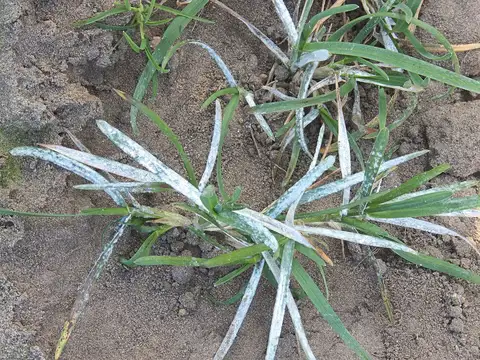
A white, dusty coating on grass blades in shady lawn areas. It looks bad but is mostly a symptom of too much shade.