Helminthosporium Leaf Spot / Melting Out
A cool-season disease that starts as small leaf spots and can weaken tall fescue and bluegrass roots, causing thin, dying patches.

A cool-season disease that starts as small leaf spots and can weaken tall fescue and bluegrass roots, causing thin, dying patches.
Small purple-to-brown spots with tan centers on the grass blades. As it progresses, the lawn can thin out and die in patches as the roots and crowns get damaged, especially in lawns mowed too short or growing in shade.
Often mistaken for: Other leaf spot diseases or general summer heat/drought stress thinning
Shows up during cool, wet spells in spring and fall here in the Triangle. The worst thinning (melting out) often becomes obvious once summer heat stresses grass that was already weakened by spring infection.
Affects home lawns of tall fescue and Kentucky bluegrass.
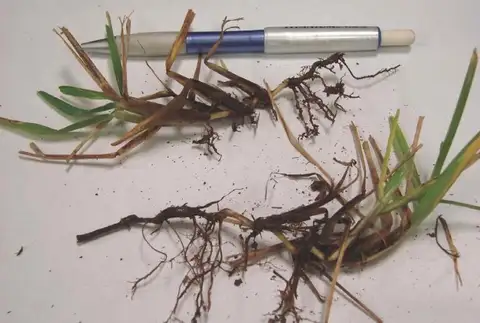
A soil-borne disease that attacks bermudagrass roots, causing patches of thin, weak turf that struggle to recover.
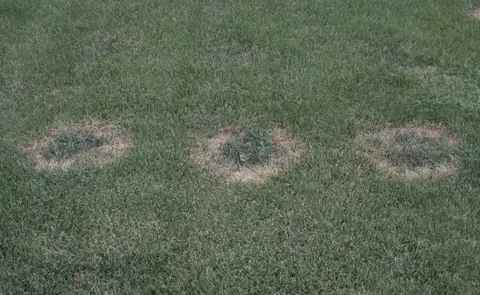
A root disease of Kentucky bluegrass and fine fescue that shows up as dead patches during summer heat and drought.
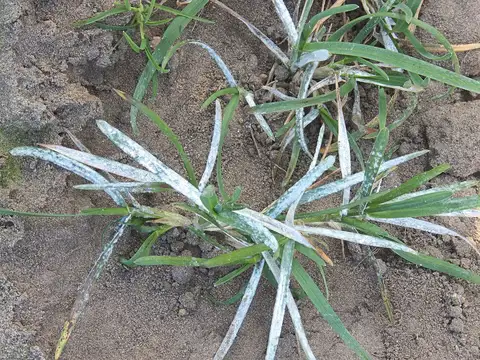
A white, dusty coating on grass blades in shady lawn areas. It looks bad but is mostly a symptom of too much shade.
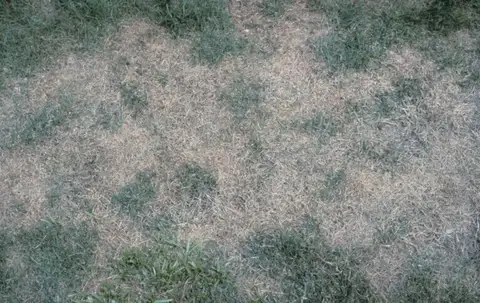
A fast-moving fungal disease that can wreck a lawn in a day during hot, humid, wet weather.