Summer Patch
A root disease of Kentucky bluegrass and fine fescue that shows up as dead patches during summer heat and drought.
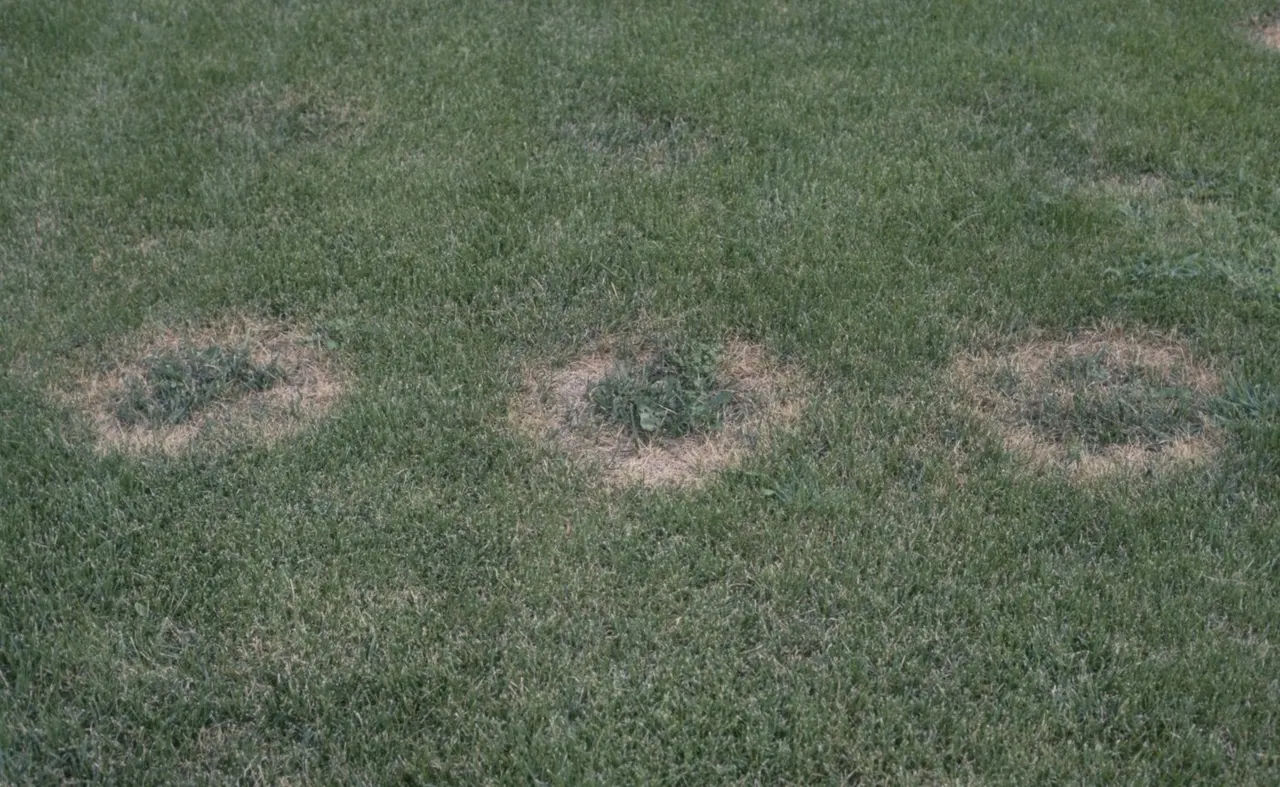
A root disease of Kentucky bluegrass and fine fescue that shows up as dead patches during summer heat and drought.
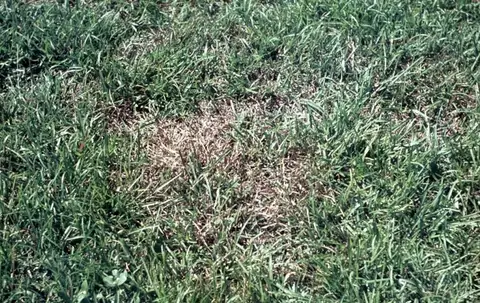
Round patches of turf that wilt and then turn straw to reddish-brown. Often you'll see a ring of dying grass with a tuft of green surviving in the middle, called a 'frog-eye' pattern. If you dig down, the roots look dark, rotted, and thin instead of healthy and white.
Often mistaken for: Other patch diseases or general drought stress
The damage actually starts back in late spring when soil warms up, but you won't see it above ground until the heat and dry stress of summer hit — by then the roots are already hurt.
Home lawns with Kentucky bluegrass or fine fescue.
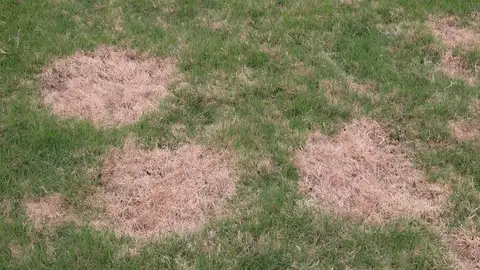
A fungal disease of bermuda and zoysia lawns that leaves circular dead patches which don't green up in spring.
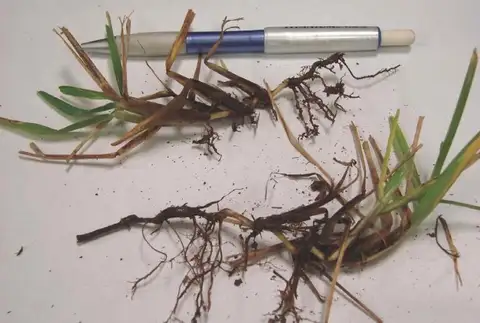
A soil-borne disease that attacks bermudagrass roots, causing patches of thin, weak turf that struggle to recover.
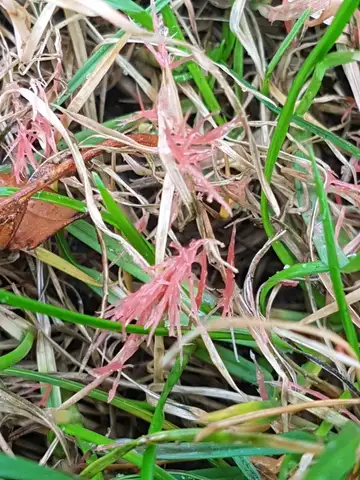
A lawn fungus that shows up as pink-ish patches, usually tied to low fertility in cool, wet weather.
A fungal disease that causes big circular patches in warm-season lawns during cool, wet weather.