Greenbrier (Smilax)
Smilax spp.
A thorny native vine that creeps from wood edges into beds and lawns and regrows from tough underground tubers no matter how often it is cut.
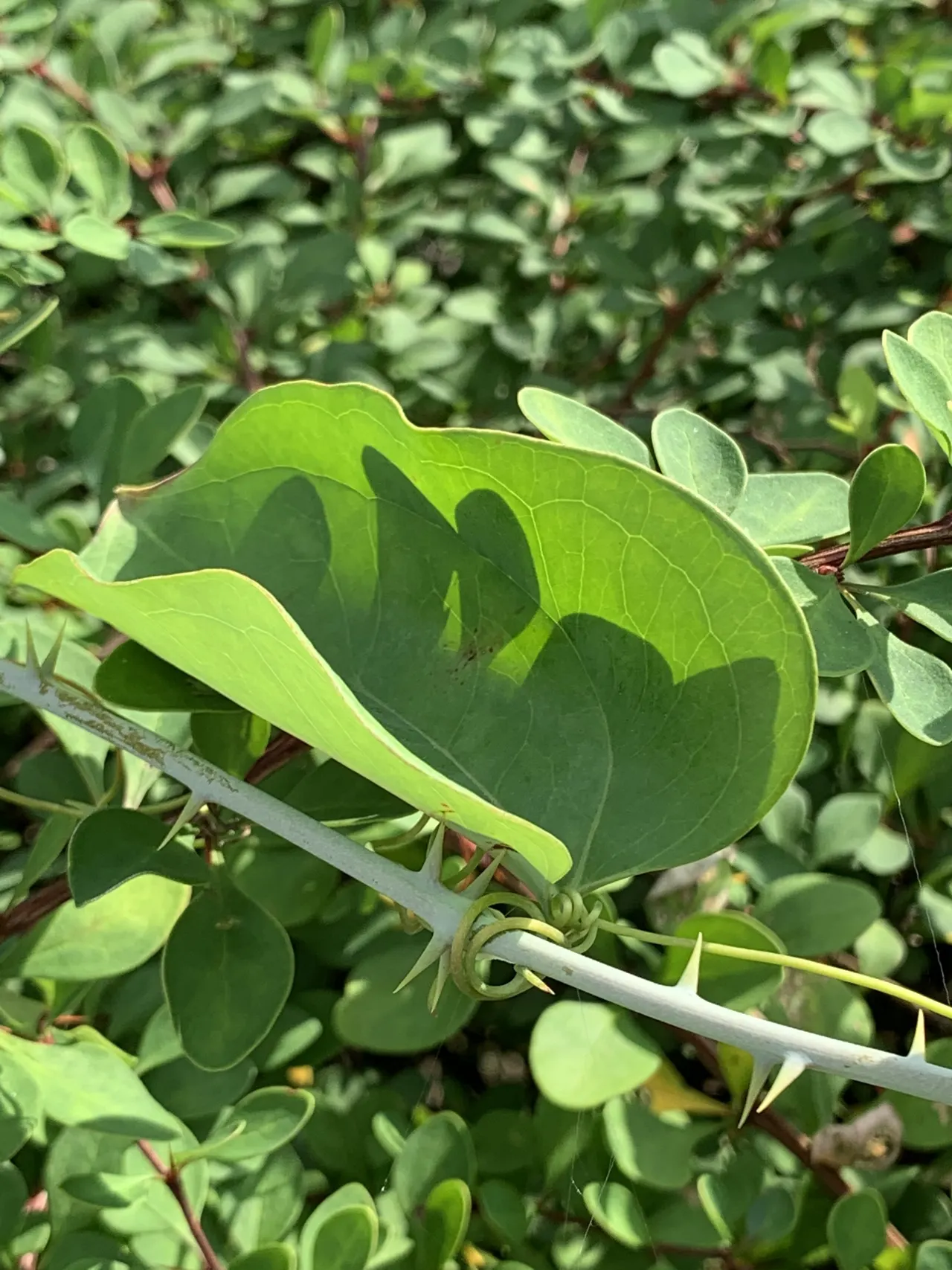
A thorny native vine that creeps from wood edges into beds and lawns and regrows from tough underground tubers no matter how often it is cut.
Green, wiry stems armed with stiff thorns that climb and tangle with curling tendrils. Leaves are glossy, heart-shaped to rounded, with a few parallel veins running the length of the blade, and some species stay green through winter. It makes small clusters of blue-black berries. Below ground is the real plant: a knobby mass of tubers and rhizomes that can be the size of a football. Common greenbrier, saw greenbrier and cat greenbrier are the usual ones here.
Often mistaken for: Blackberry or wild rose (compound leaves, different thorns), or a young grapevine (no thorns)
Grows from spring through fall in the Triangle, and new shoots keep coming up from the tubers all summer after you cut them. The green stems and some leaves hang on through winter.
Woods edges, fence lines, under trees and in neglected beds across NW Raleigh, from where it creeps into the lawn and gets mowed off into a stubby, thorny patch.
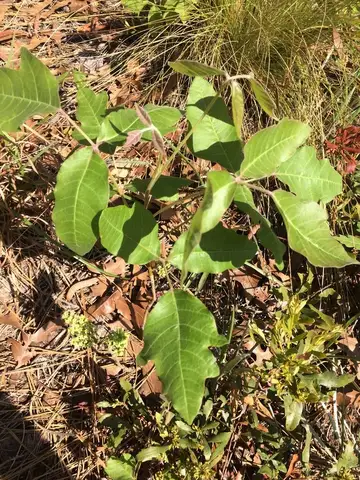
A low, fuzzy-leaved shrub with the same rash-causing oil as poison ivy. Less common in the Triangle than poison ivy.
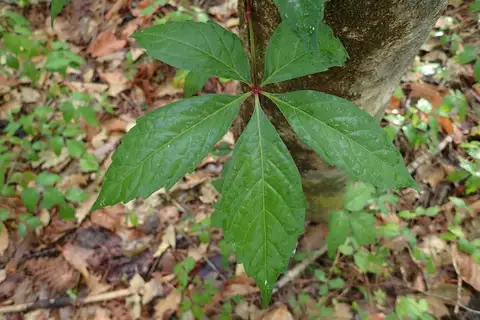
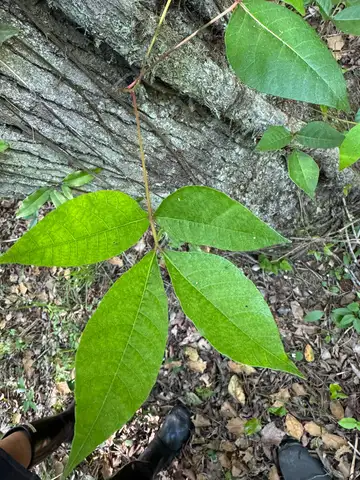
A fast native vine with five leaflets that climbs trees, fences and houses. Often mistaken for poison ivy.
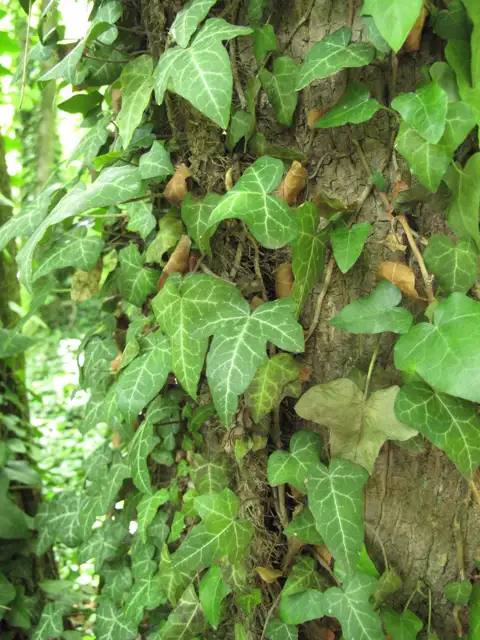
An evergreen, invasive vine that creeps out of beds into lawn edges and climbs trees, fences and walls with clinging rootlets.
"Leaves of three, let it be." The vine behind most itchy rashes in the Triangle, and it can grow as a groundcover, shrub or climbing vine.