English Ivy
Hedera helix
An evergreen, invasive vine that creeps out of beds into lawn edges and climbs trees, fences and walls with clinging rootlets.
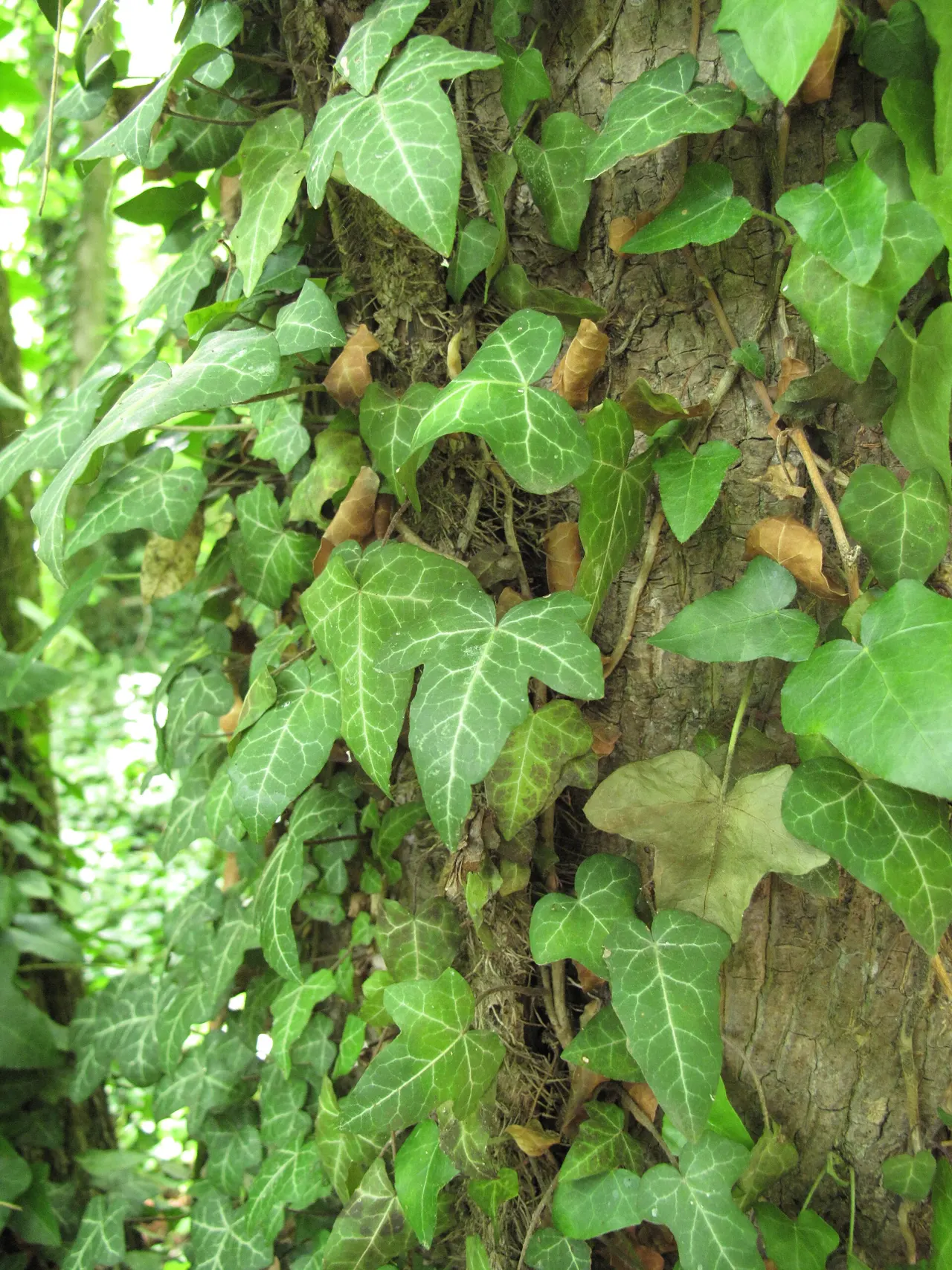
An evergreen, invasive vine that creeps out of beds into lawn edges and climbs trees, fences and walls with clinging rootlets.
Glossy, dark green, leathery leaves with three to five lobes and pale veins on the creeping form; thick, hairy-looking stems that cling to bark or brick with small rootlets. Once it climbs high and matures, the leaves lose their lobes, and it produces clusters of small greenish flowers and black berries. It stays green all winter, which is when it stands out most against a dormant lawn edge.
Often mistaken for: Boston ivy, wintercreeper (Euonymus), Algerian ivy, or poison ivy on a tree trunk
Evergreen and present year-round, with the fastest growth in spring and early summer. Runners creep into the lawn all season and are easiest to see in winter when everything else is brown.
Old foundation beds, shady slopes, under mature trees, and woods edges across Raleigh's older neighborhoods, where it was planted as groundcover decades ago and has since climbed the trees.
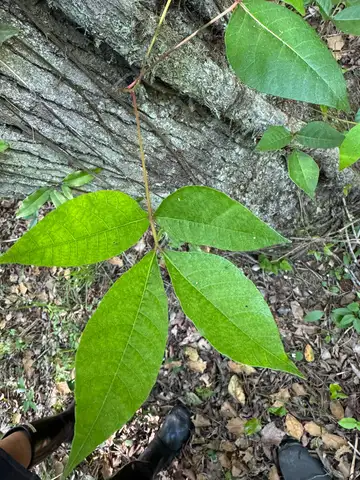
"Leaves of three, let it be." The vine behind most itchy rashes in the Triangle, and it can grow as a groundcover, shrub or climbing vine.
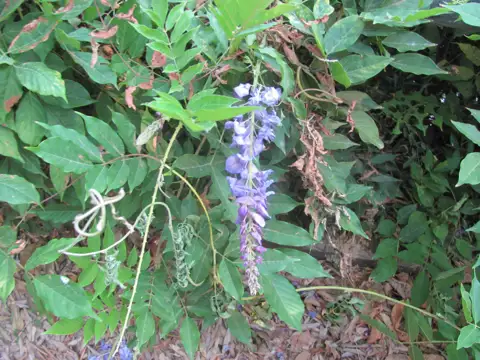
A fast, woody, invasive vine with fragrant purple spring flowers that escapes old plantings, runs along the ground and strangles trees and fences.
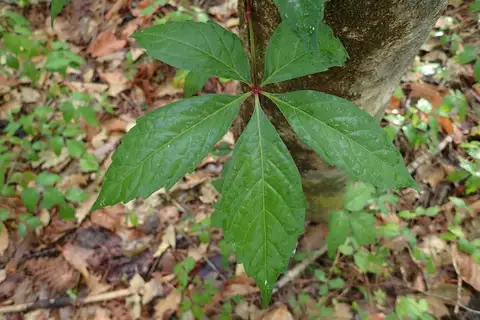
A fast native vine with five leaflets that climbs trees, fences and houses. Often mistaken for poison ivy.
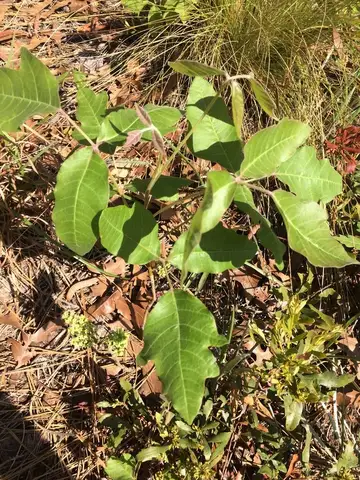
A low, fuzzy-leaved shrub with the same rash-causing oil as poison ivy. Less common in the Triangle than poison ivy.