Fire Blight
A bacterial disease that blackens flowers and shoots on rose-family shrubs and trees, giving them a scorched look.
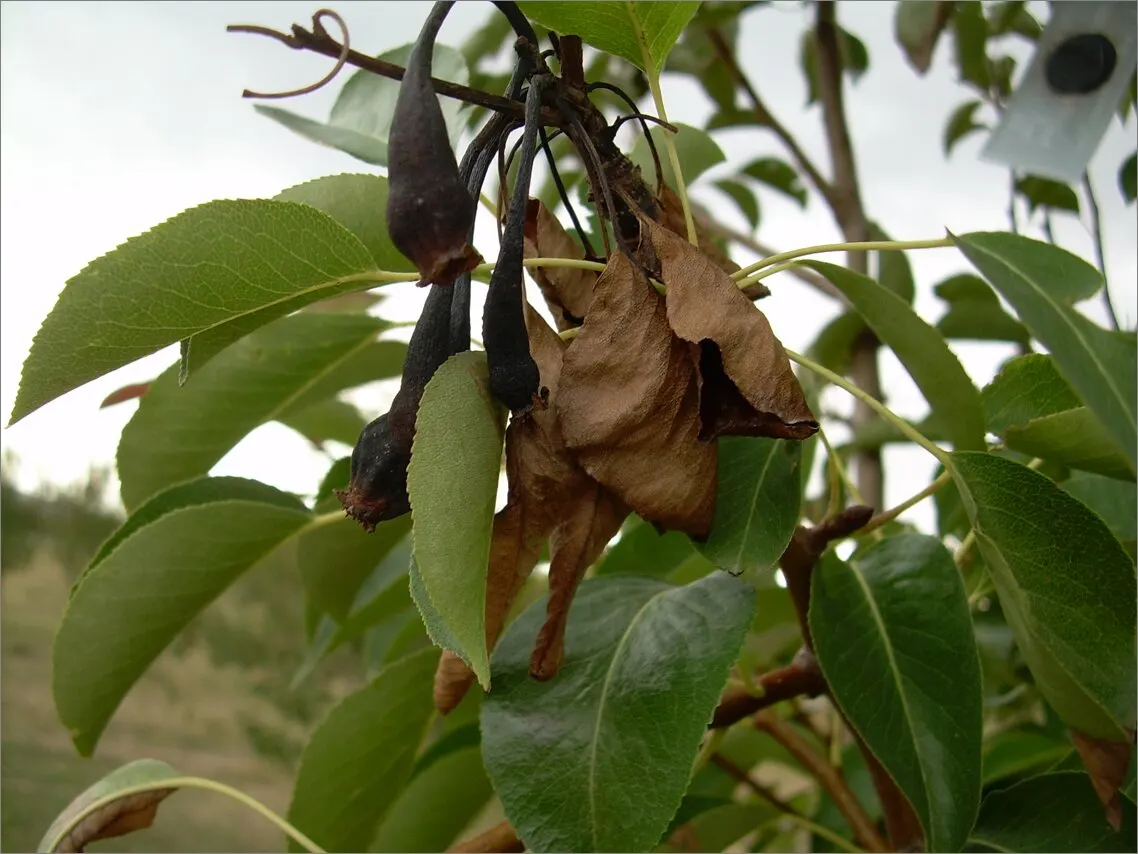
A bacterial disease that blackens flowers and shoots on rose-family shrubs and trees, giving them a scorched look.
Flowers, shoots, and leaves turn black as if scorched by fire. You may see watery tan ooze on affected wood, and shoot tips often curl over into a shepherd's-crook shape. It's a bacterial problem, not a fungus.
Often mistaken for: Frost damage or general dieback from other causes
Shows up most during warm, wet spring weather right around bloom time. Heavy nitrogen feeding makes plants more susceptible by pushing soft, succulent growth.
Affects rose-family ornamentals like pyracantha, flowering pear, crabapple, cotoneaster, hawthorn, quince, and spirea.
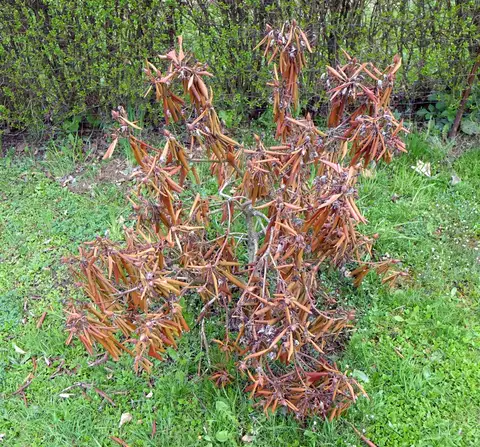
A soil-borne disease that rots roots and crowns of shrubs in wet, poorly-drained spots, often mistaken for drought stress.
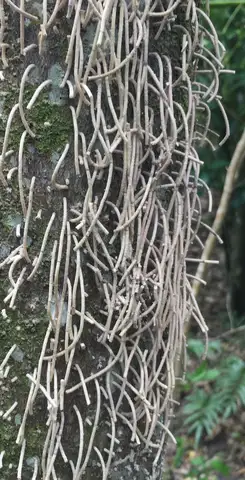
Tiny beetles that bore into stressed or newly planted trees, often killing them fast once they attack.
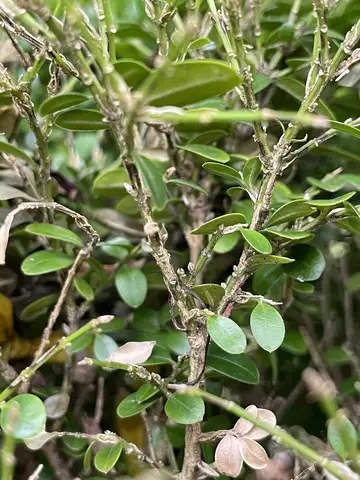
A serious fungal disease of boxwood that causes rapid leaf drop and can kill plants if left unchecked.
Moth larvae that bore into tree and shrub trunks, causing dieback—often starting at wounds or graft unions.