Cedar-Apple Rust
Gymnosporangium spp.
A fungus that needs both cedar/juniper and crabapple-type trees to complete its cycle, causing ugly spots and galls.
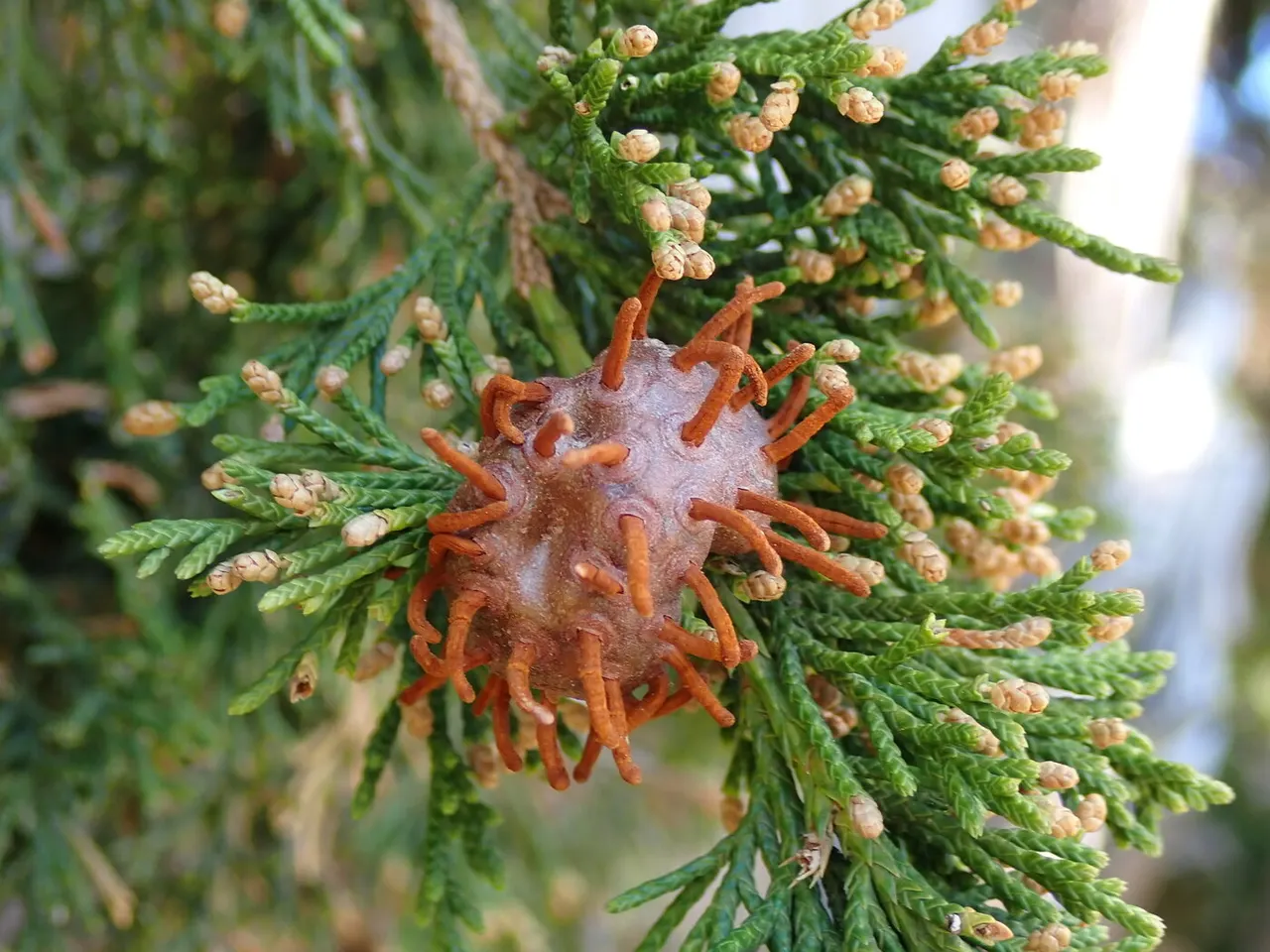
A fungus that needs both cedar/juniper and crabapple-type trees to complete its cycle, causing ugly spots and galls.
On junipers and cedars, look for round galls that sprout bright orange, jelly-like 'horns' during wet spring weather. On crabapple, hawthorn, quince, or serviceberry, you'll see bright orange-yellow spots on the leaves, early leaf drop, and sometimes distorted fruit.
Often mistaken for: other leaf spot diseases on crabapple/hawthorn
Spores release from the cedar galls during spring rains, usually around April, then infect the other host trees over the following months.
Affects eastern redcedar and junipers along with crabapple, hawthorn, quince, and serviceberry planted nearby.
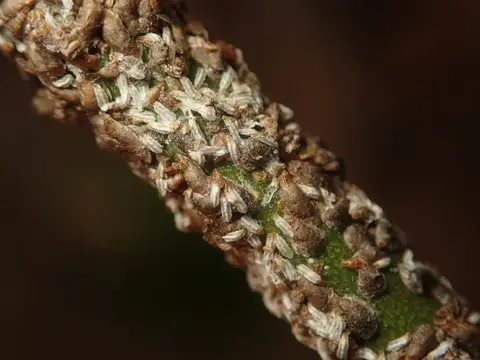
Tiny bark-hugging pests that can weaken shrubs like euonymus, camellia, and holly over time.
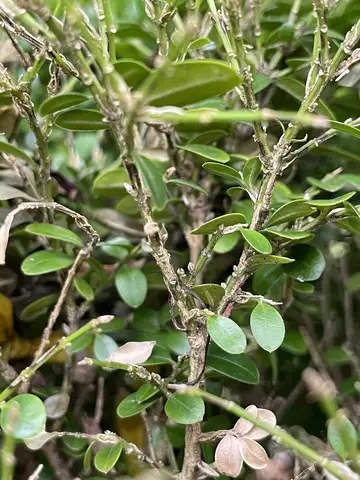
A serious fungal disease of boxwood that causes rapid leaf drop and can kill plants if left unchecked.
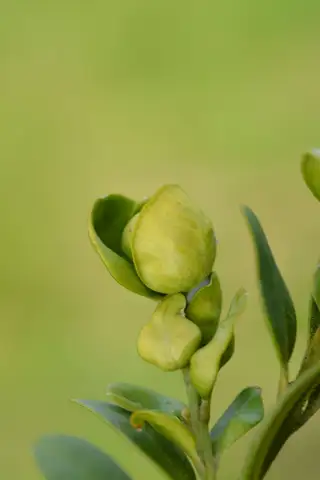
A tiny insect that makes boxwood leaves cup and curl. It's mostly a cosmetic issue, not a plant-killer.
A nighttime beetle whose grub-like larvae chew on plant roots, sometimes killing shrubs like azaleas and yews.