Black Vine Weevil
A nighttime beetle whose grub-like larvae chew on plant roots, sometimes killing shrubs like azaleas and yews.
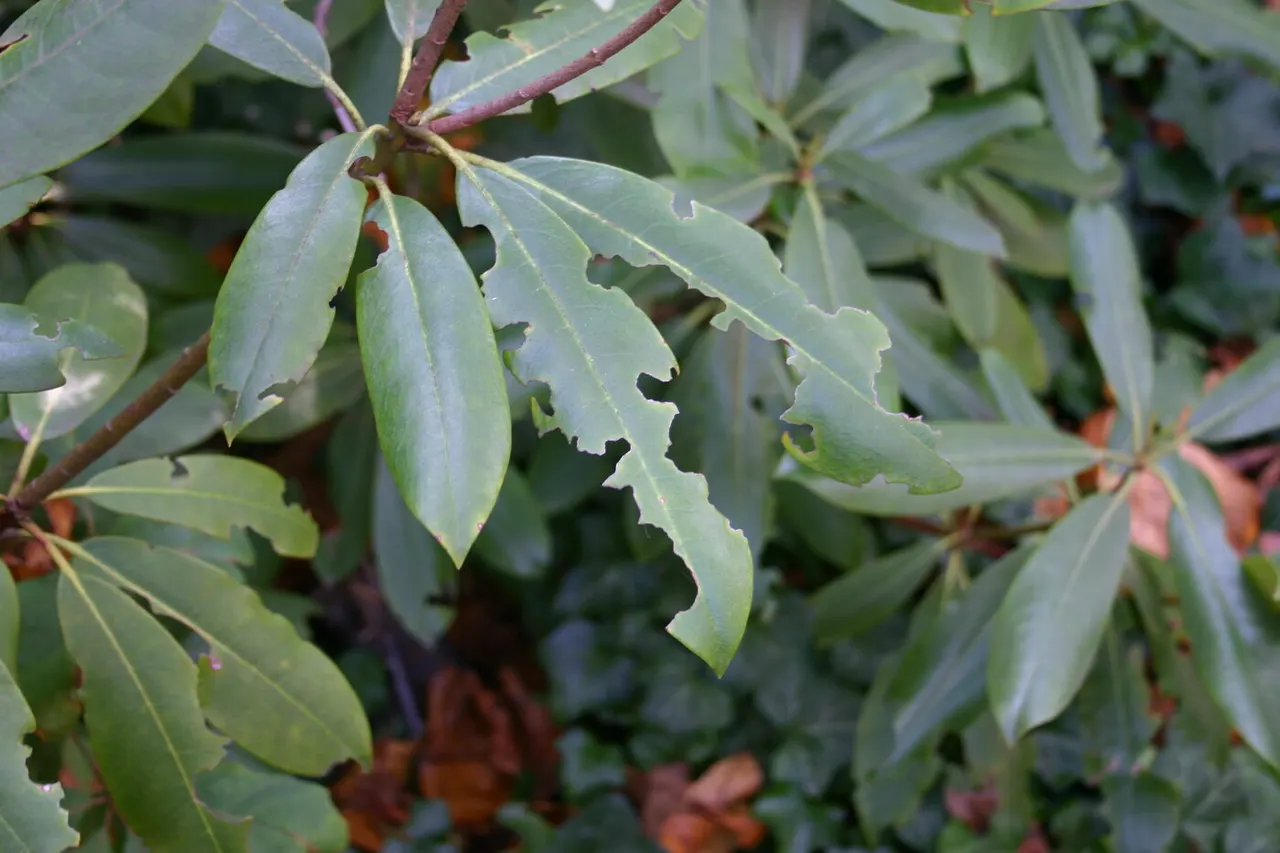
A nighttime beetle whose grub-like larvae chew on plant roots, sometimes killing shrubs like azaleas and yews.
You'll rarely see the adult weevil itself since it only comes out at night and hides in mulch during the day. The giveaway sign is leaf edges with small crescent or half-moon shaped notches chewed out. Underground, look for C-shaped white larvae feeding on roots and the base of the stem.
Often mistaken for: Other leaf-notching insects or general leaf edge damage from various chewing pests
Adults are active and feeding at night from late spring through summer, laying eggs in the soil. The larvae then feed on roots through fall and over winter, which is when the real plant damage happens.
Shows up on azaleas, rhododendron, euonymus, yew, hemlock, and holly, especially plants in their first couple years in the landscape.
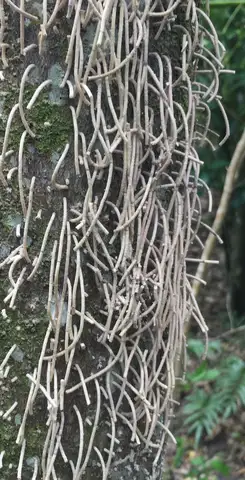
Tiny beetles that bore into stressed or newly planted trees, often killing them fast once they attack.
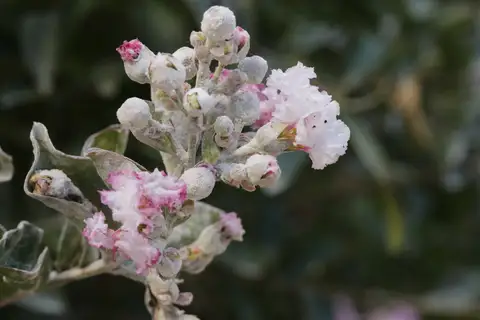
A common fungal disease that coats leaves and stems with a white, powdery film on shrubs and trees.
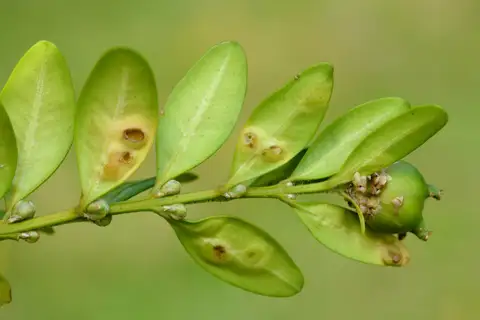
A tiny pest that tunnels inside boxwood leaves, leaving them blistered and off-color. Bad infestations can make a boxwood look sickly year-round.
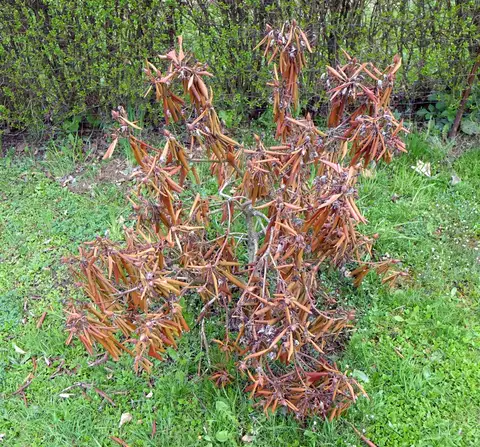
A soil-borne disease that rots roots and crowns of shrubs in wet, poorly-drained spots, often mistaken for drought stress.