Boxwood Volutella Blight
Volutella spp.
A stress-related fungal disease that causes dieback in boxwood. It's a look-alike for the more serious boxwood blight, so ID matters.
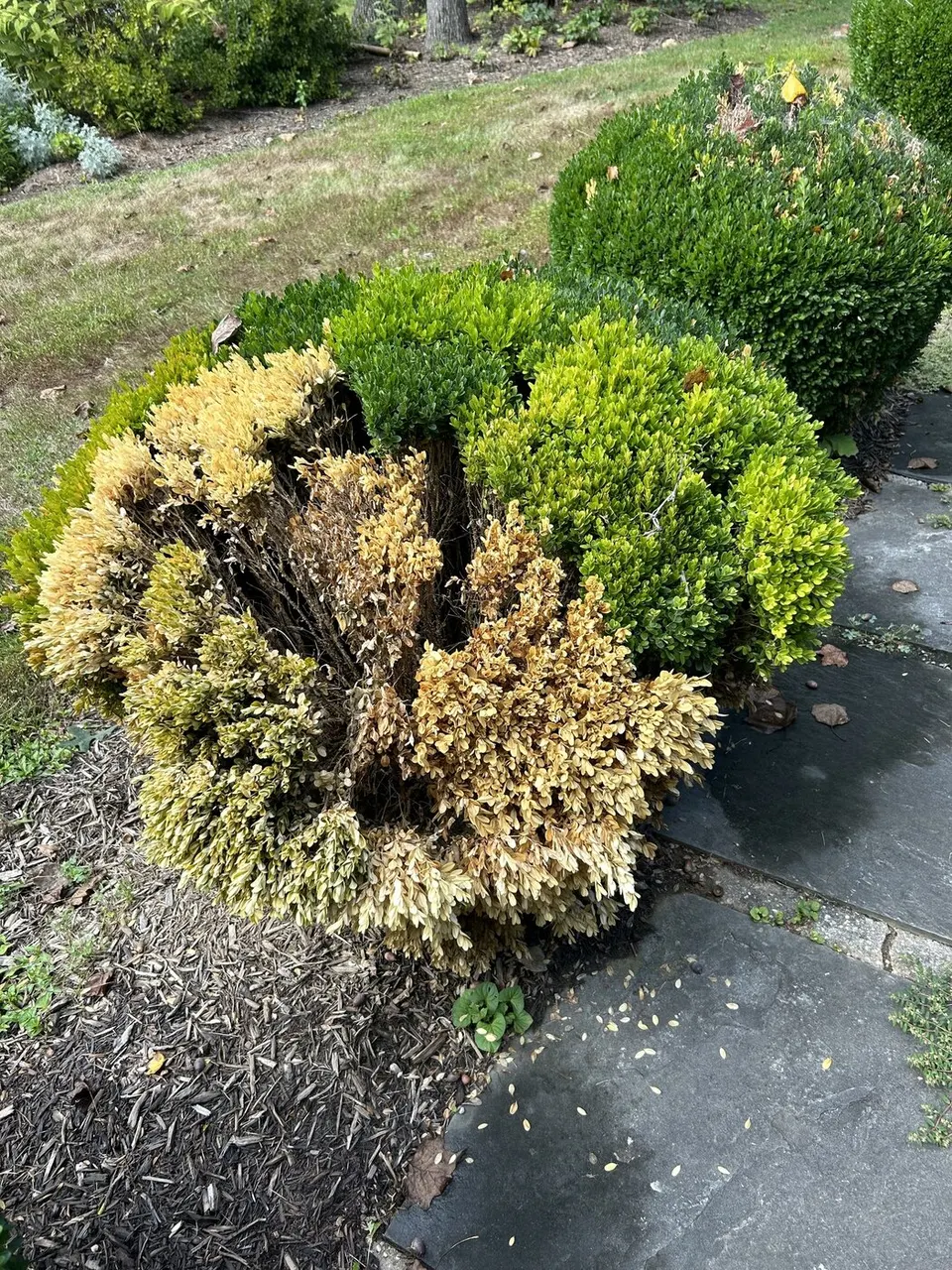
A stress-related fungal disease that causes dieback in boxwood. It's a look-alike for the more serious boxwood blight, so ID matters.
Leaves fade from green to bronze to tan, and bark starts peeling back on affected stems with branch dieback. Unlike true boxwood blight, you won't see black streaking cankers on the stems—that's the key difference.
Often mistaken for: True Calonectria boxwood blight (look for black stem cankers, which this disease lacks)
Shows up spring through fall, especially when stressed or wounded plants meet damp conditions.
Affects boxwood, and has also been seen on pachysandra.
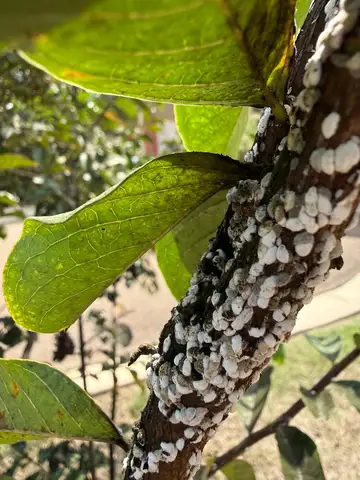
A scale insect that coats crape myrtle bark with white fuzz and causes ugly black sooty mold on trunks and leaves.
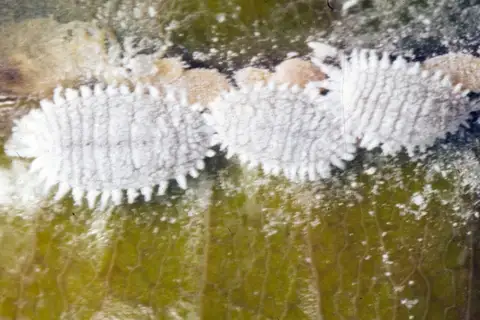
Small sap-sucking pests that leave sticky, cottony residue on plants and can stunt new growth.
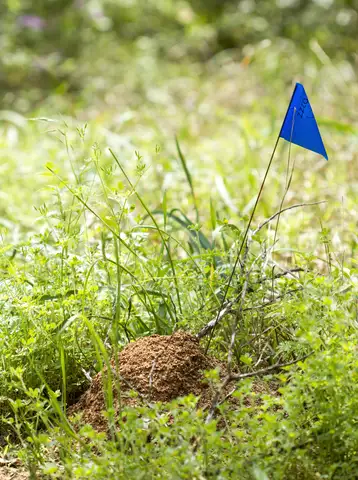
Fire ants build stinging mounds in beds and lawn edges — a safety and nuisance issue for homeowners.
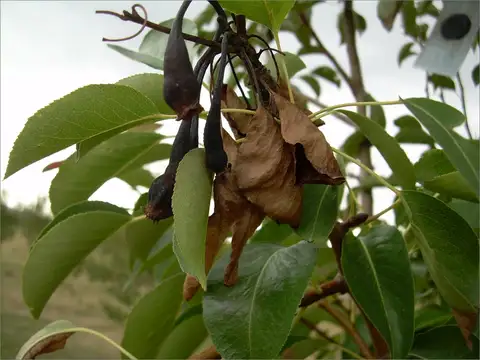
A bacterial disease that blackens flowers and shoots on rose-family shrubs and trees, giving them a scorched look.