Rough Bluegrass (Poa trivialis)
Poa trivialis
A creeping, lime-green cool-season grass that patches up a fescue lawn in spring, then goes brown and dormant in summer heat.
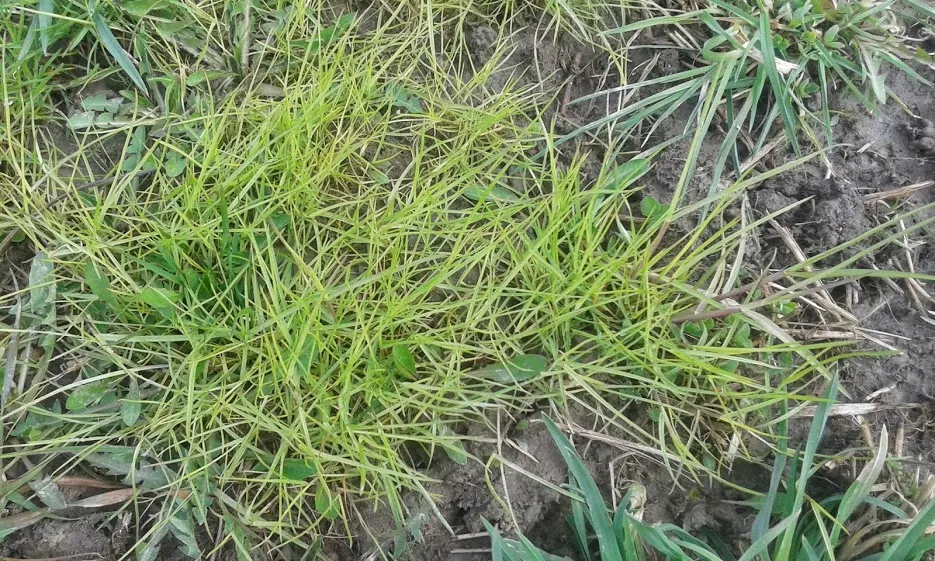
A creeping, lime-green cool-season grass that patches up a fescue lawn in spring, then goes brown and dormant in summer heat.
Patches of fine, soft, bright lime-green to yellow-green grass that stand out against the darker, coarser tall fescue. The leaf tip is boat-shaped like other bluegrasses, the underside of the blade is glossy, and there is a long, pointed membrane (ligule) where the blade meets the stem. It spreads by above-ground runners (stolons), so patches peel up like a mat. In July and August the patches thin out and turn brown, then green back up in fall.
Often mistaken for: Annual bluegrass (clumpy, seeds out in spring, dies in summer), creeping bentgrass, Kentucky bluegrass, or brown patch when it browns out in summer
Greens up early and is most obvious in March through May in the Triangle, then thins and browns out in summer heat and drought before returning in September.
Shady, damp or over-watered parts of tall fescue lawns, often near downspouts, irrigation heads or under trees, and it usually arrives in a bag of contaminated seed.
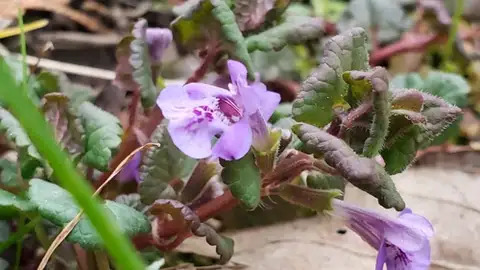
A minty-smelling creeping weed that spreads fast in shady, damp lawns and is tough to get rid of.
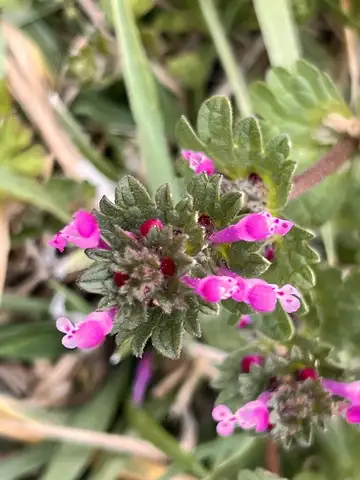
A winter weed that pops up in thin lawns, covering them in purple flowers by late winter.
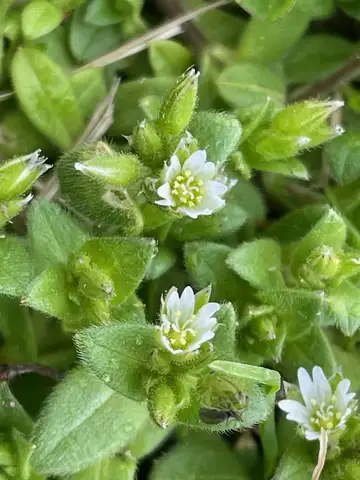
A low, creeping weed that thrives in thin, damp lawns and spreads by rooting as it grows.
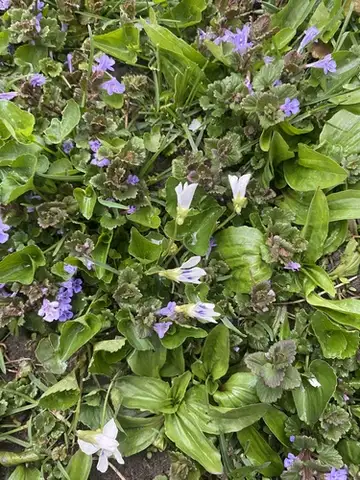
A tough perennial weed with pretty purple flowers that's notoriously hard to get rid of once established in a lawn.