What it looks like
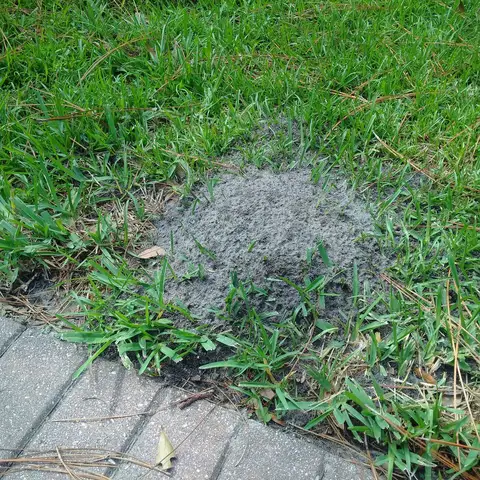
You'll see irregular patches of lawn turning yellow to brown and slowly thinning out, especially in centipedegrass. The grass won't bounce back with water or fertilizer. If you dig at the edge of a declining patch, you can find tiny, hard, pearl-like gold-brown cysts attached to the grass roots — that's the actual insect, and it's the only way to confirm what's going on since you never see it above ground.
Often mistaken for: Drought stress, fungal disease, or other slow lawn decline that doesn't respond to normal care
When it shows up in the Triangle
Shows up as slow, chronic decline any time during the growing season, and gets worse when the lawn is under drought stress.
Where you’ll see it
Mainly affects centipedegrass lawns, though other turf can be affected too.
What you can do
- Keep the lawn watered consistently, especially during dry stretches, to reduce stress
- Maintain steady, appropriate fertility to help the grass cope
- Avoid scalping or other stress-inducing mowing habits
- If you're reseeding or replacing lawn in an area with a history of this problem, consider a different grass type instead of centipede
- Don't waste money on repeated fertilizer or fungicide treatments hoping for a turnaround — they won't help once it's established