Virginia Buttonweed
Diodia virginiana
A stubborn, mat-forming weed that thrives in wet, compacted lawns and is notoriously hard to kill.
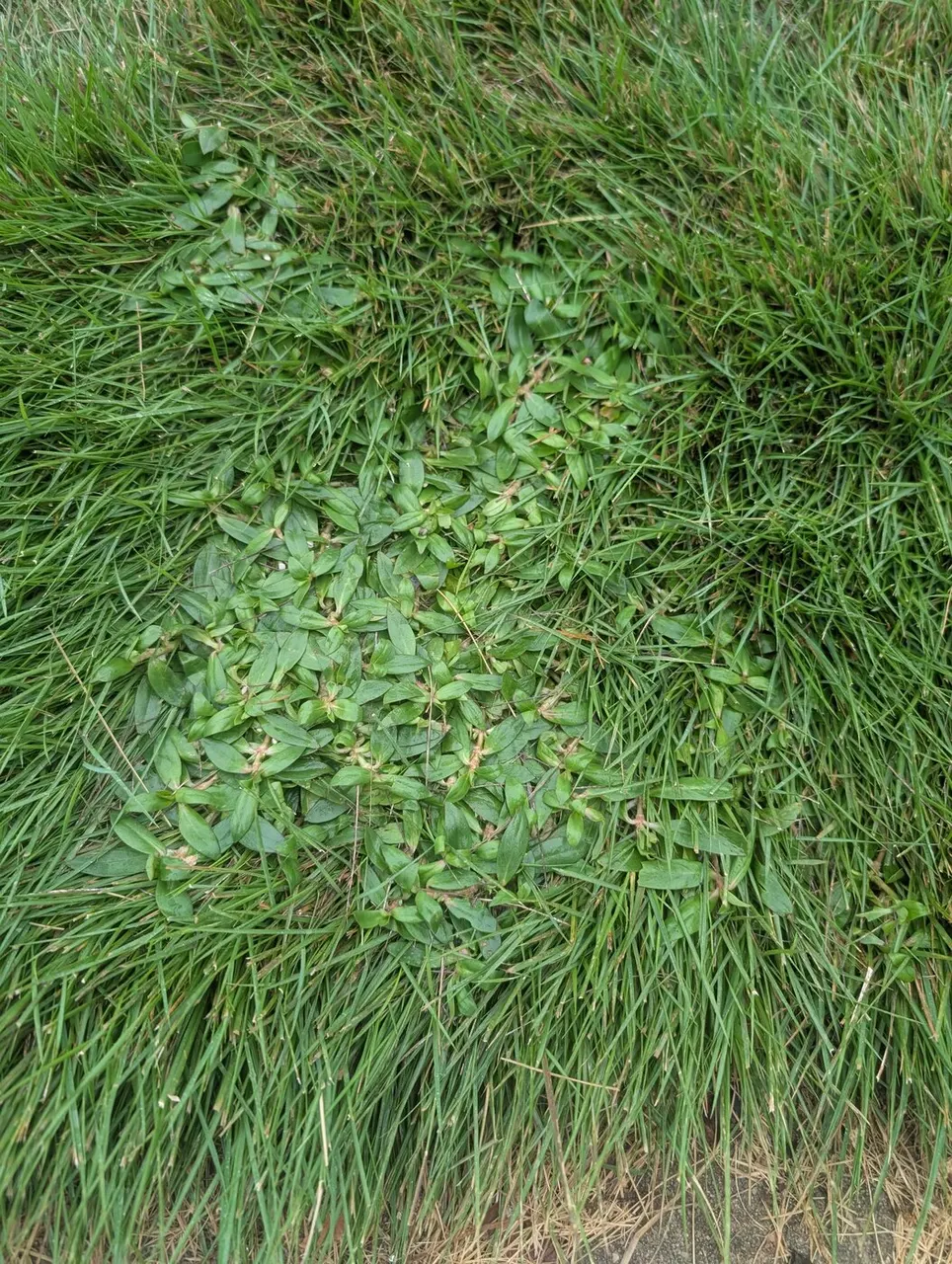
A stubborn, mat-forming weed that thrives in wet, compacted lawns and is notoriously hard to kill.
Grows in low, flat mats with rough, opposite leaves that sit right against the stem. Stems are ridged and hairy, and leaves often look yellow-mottled. Small white, four-petaled star-shaped flowers pop up where the leaves meet the stem.
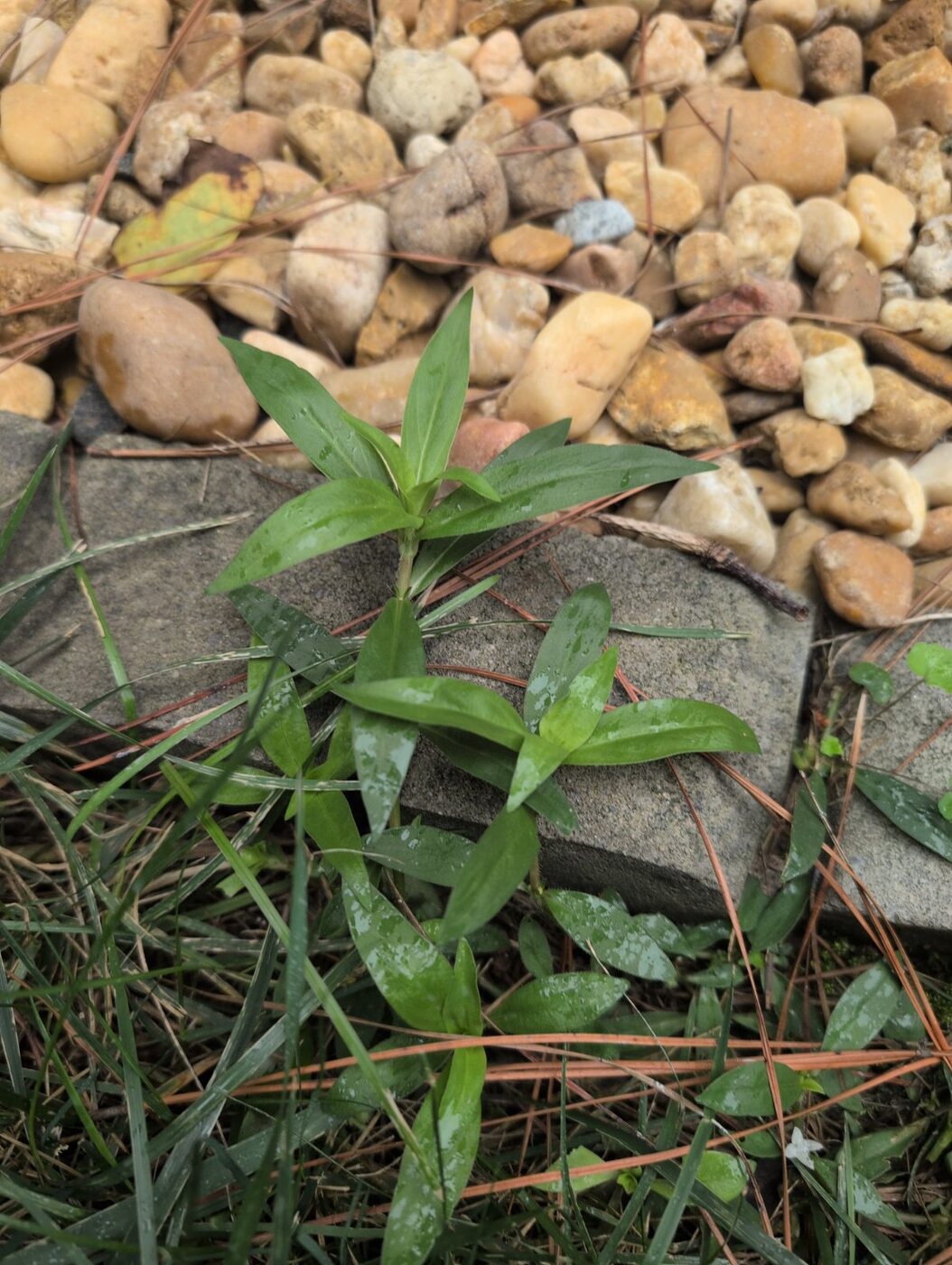
Often mistaken for: Other low-growing mat weeds with small white flowers
Active from June through September, especially during warm, wet stretches.
Shows up in home lawns with wet, poorly drained, or compacted soil.
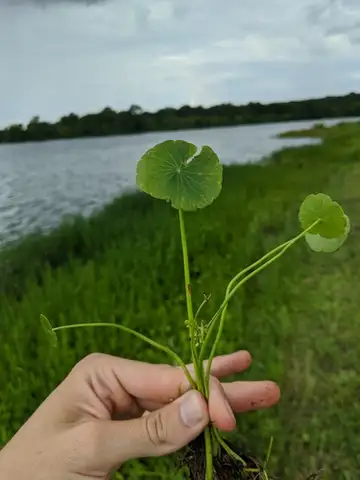
A shiny, round-leafed weed that thrives in soggy soil and often signals overwatering or poor drainage.
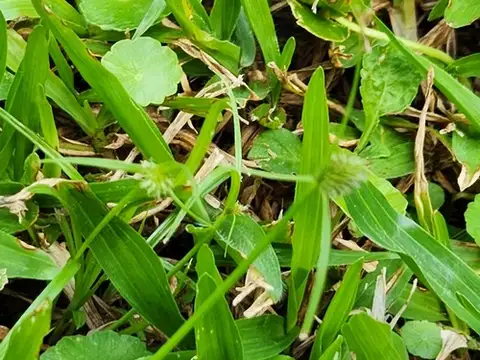
A creeping perennial sedge that forms thick mats in wet lawns, quickly crowding out grass.
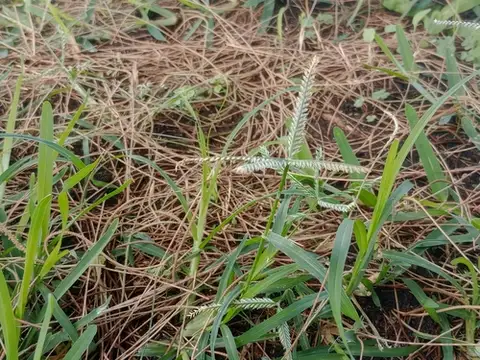
A tough summer grassy weed that thrives in compacted, worn-down lawns and spreads fast in high-traffic areas.
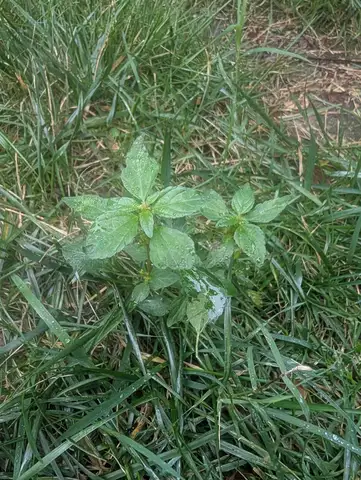
An upright summer weed with toothed, diamond-shaped leaves and tiny flowers tucked in leafy cups. Common in NC lawns and beds.