Southern Blight
A soil-borne fungal disease that kills turf in circular patches during hot, humid summer weather.
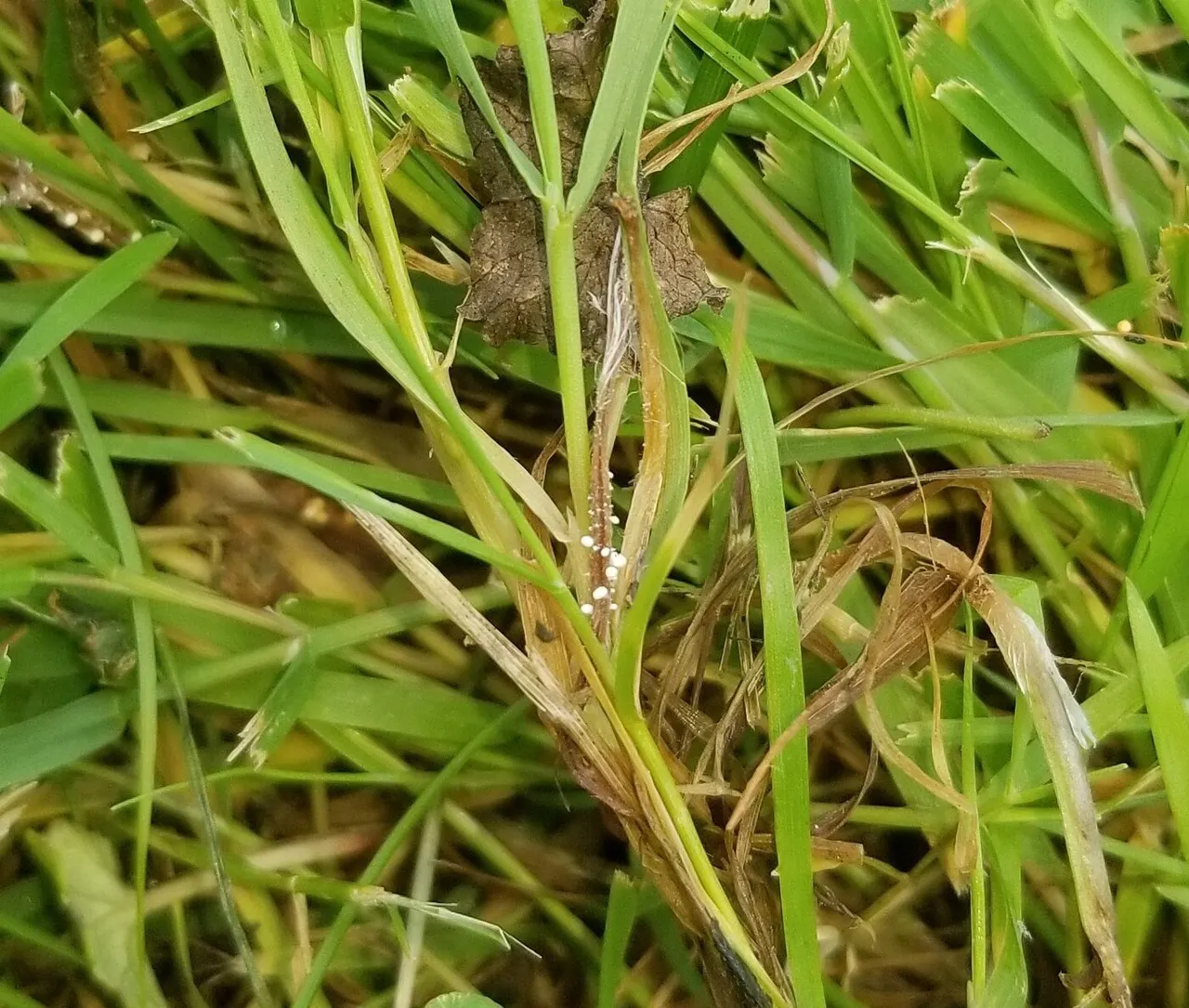
A soil-borne fungal disease that kills turf in circular patches during hot, humid summer weather.
You'll see round patches of dead or dying grass with white, fan-shaped fungal growth spreading across the surface. Around the edge of the patch, look closely for tiny tan-to-brown balls that look like mustard seeds sitting right at the soil or thatch line — that's the telltale sign this is southern blight and not something else.
Often mistaken for: Other summer patch diseases; confirm by checking for the small mustard-seed-like sclerotia at the soil surface
Shows up during hot, humid summer weather here in the Triangle, especially in thatchy or poorly-drained lawns. Once it's in the soil, it can stick around for years.
Can affect any home lawn, but is worse where thatch has built up and drainage is poor.
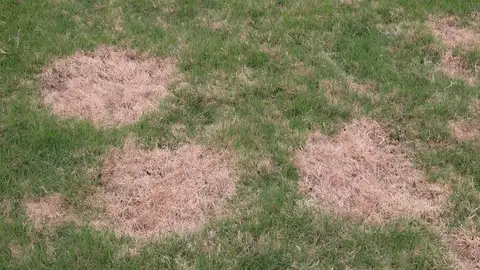
A fungal disease of bermuda and zoysia lawns that leaves circular dead patches which don't green up in spring.
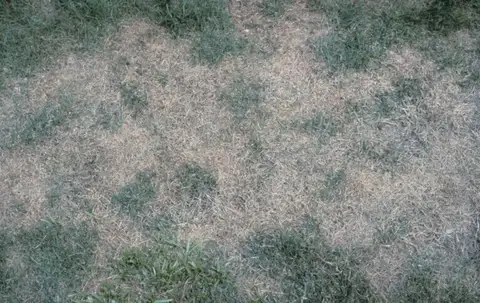
A fast-moving fungal disease that can wreck a lawn in a day during hot, humid, wet weather.
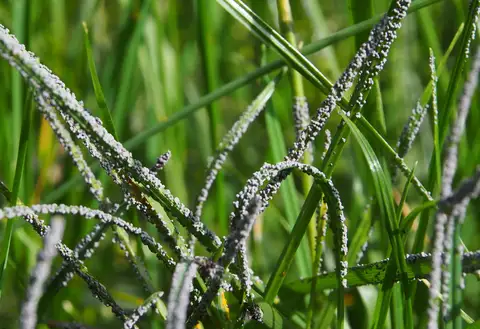
A harmless, oddball fungus-like growth that shows up on grass overnight and looks worse than it is.
Tiny soil pests that damage grass roots, causing patchy thinning that looks like drought stress but doesn't respond to water.