Warm-season grass is heading toward winter dormancy. Here's what bermuda and zoysia need in the fall, what they don't, and why fall feeding is a mistake for them.
 David Myers · owner & NC-licensed pesticide applicator
October 30, 2026
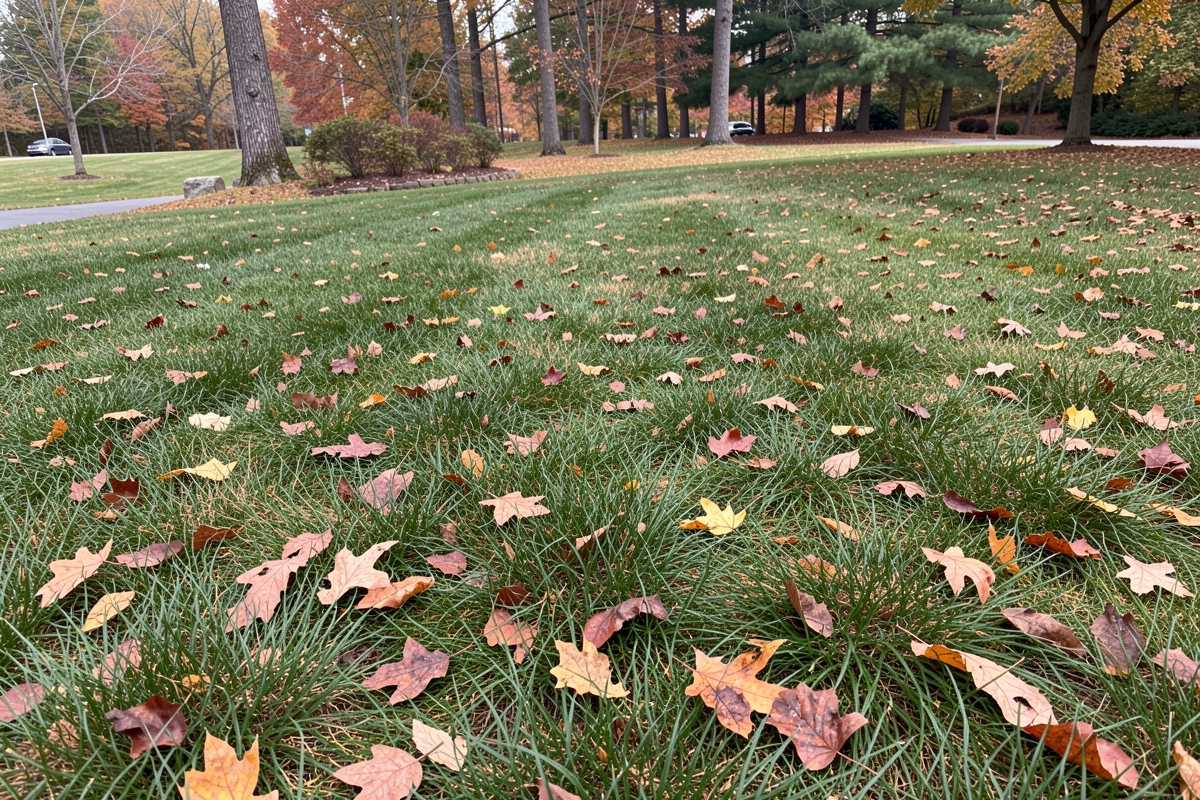
Most fall lawn advice is written for tall fescue, and a lot of it is the opposite of what bermuda and zoysia need. If your lawn is a warm-season grass, here's how to get it through fall and set it up for a strong green-up next spring.
Bermuda and zoysia love heat. As nights cool off in September and October, they slow down, and after the first hard frost, usually late October or early November around Raleigh, they go dormant and turn tan for the winter. That's normal and healthy. The roots are alive; the grass is just resting.
This is the big one. Fescue gets most of its fertilizer in fall. Warm-season grass should get little to no nitrogen once it starts slowing down. Late-season nitrogen pushes soft new growth right before winter, which can mean more winter injury and more disease, including spring dead spot in bermuda and large patch in zoysia.
What a warm-season lawn does benefit from in fall is potassium. A low-nitrogen, high-potassium feeding before dormancy helps the grass handle cold and come back stronger. That's the late-fall visit on my warm-season program.
When your bermuda or zoysia goes dormant, winter weeds move in: Poa annua (annual bluegrass), henbit, chickweed and others. On a tan dormant lawn they stand out like a sore thumb, and they set seed for next year.
The fix is a fall pre-emergent, timed to when the soil cools below about 70°F, usually mid-September to early October here. It stops most winter weeds from ever sprouting. Anything that sneaks through can be spot-treated over the winter while the grass is dormant.
Large patch is a fungal disease that shows up as big, circular tan or orange patches, often in fall and again in spring as the grass greens up. Zoysia is especially prone. It's worst on lawns that stay wet: heavy irrigation, poor drainage or thick thatch. If it has been a problem before, a preventive fungicide in fall, when soil temperatures fall through about 70°F, does far more than trying to cure it after the patches appear.
Core aerating bermuda and zoysia in fall just opens the door for winter weeds without giving the grass time to recover. The right time is late spring into early summer, when warm-season grass is growing hard and fills in the holes within a couple of weeks.
Curious what's going on in your lawn? Look it up in the lawn library, or send me a photo through the free photo checkup.
Posted prices, no contracts, and the same person on your lawn every visit.