Poa Annua: The Clumpy Light-Green Grass in Your Winter Lawn
2026-10-23 · By David — owner & NC-licensed pesticide applicator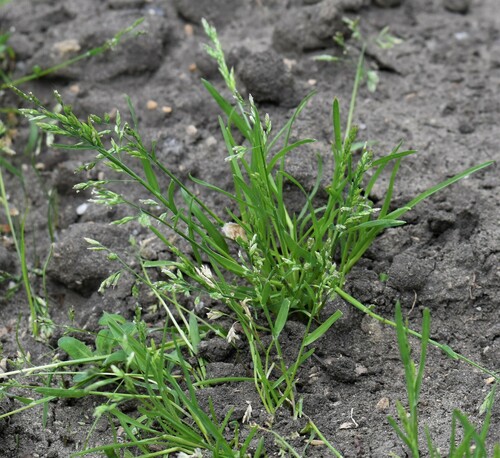
If your lawn gets light-green clumps in winter that send up little white seed heads in early spring, even when you mow it low, you've met Poa annua, also called annual bluegrass. It is one of the most common winter weeds in the Triangle, and one of the most misunderstood.
How to recognize it
- Color: noticeably lighter, brighter green than tall fescue or dormant bermuda.
- Shape: grows in clumps or patches instead of blending in.
- Seed heads: small, white to cream-colored seed heads in late winter and spring, low enough to survive mowing.
- Timing: shows up in late fall and winter, looks its worst in March and April, then dies in the summer heat.
That summer die-off is part of the problem. When Poa dies in June, it leaves bare spots right when it's hardest to grow grass, and crabgrass is happy to fill them. You can see photos in the lawn library.
Why it keeps coming back
Poa annua is a winter annual: it sprouts in the fall when the soil cools below about 70°F, grows through the winter, seeds in the spring and dies in the summer. One plant can drop thousands of seeds, and those seeds can sit in the soil for years. So a lawn that had Poa last spring almost always has more waiting to sprout this fall.
It loves moist, compacted soil, thin turf and lawns that are watered often and lightly.
How to stop it
1. Pre-emergent at the right time
The most effective control is a fall pre-emergent that goes down before the Poa germinates, timed to soil temperature dropping toward 70°F. In Raleigh that's usually mid-September to early October. It's part of every program I offer.
The catch for fescue lawns: most pre-emergents also stop grass seed from sprouting, so a lawn that's being overseeded can't get the usual fall pre-emergent. That's where the next step comes in.
2. A fall Poa treatment for overseeded lawns
For fescue lawns that were just aerated and overseeded, there's a treatment that targets Poa annua while being safe on the new tall fescue. I apply it in late October, a few weeks after seeding, once the Poa has started coming up. It's included in my Premium program and available as an add-on for anyone who's had Poa problems in past springs.
3. Bermuda and zoysia lawns
Warm-season lawns have more options, because the grass is dormant all winter. A fall pre-emergent prevents most of it, and anything that breaks through can be treated during dormancy without hurting the bermuda or zoysia.
4. Make the lawn less inviting
- Thicken the turf. Poa moves into thin spots. Fall overseeding (for fescue) and good feeding crowd it out.
- Water deeply and less often. Frequent light watering keeps the surface wet, which Poa loves.
- Relieve compaction. Core aeration helps the grass and makes the soil less friendly to Poa.
What not to do
Don't try to pull it by hand once it's seeding in spring: you'll just spread the seed. And most weed-and-feed products sold for broadleaf weeds don't touch it, because Poa is a grass.
If you're not sure whether what you're seeing is Poa annua, send me a photo through the free photo checkup and I'll tell you what it is and what I'd do about it.
About the author: David is the owner-operator of Thriving Lawns and an NC-licensed pesticide applicator caring for lawns across North Raleigh and southeast Durham. Get a free estimate →